
"Michael Julian has written an excellent book. Practical, detailed, and a potential life saver if you find yourself in the midst of a targeted attack."
Physical Security Audits - A.L.I.V.E.
About Physical Security Audits
A physical security audit is a physical examination and assessment of a facility to identify and evaluate security related risks and the protection of people, property, information and other assets from the real or perceived threats of external and internal security incidents. Depending on the risk determination for your facility, security audits should be conducted every three to five years.
Using American Society for Industrial Security (ASIS) International guidelines and best practices and Crime Prevention Through Environmental Design (CPTED) principles of natural surveillance, natural access control, territorial reinforcement and maintenance, a physical security audit can help you determine your threats and vulnerabilities and help mitigate your risk with countermeasures.
THE PHYSICAL SECURITY AUDIT INCLUDES:
- Kickoff Meeting
- Asset Determination
- Risk Determination Matrix
- On-site Security Survey (day/night) to Include a review of:
- Community Relationship/Neighborhood
- Property Perimeter
- External Grounds
- Parking
- Building Perimeter
- Electronic Intrusion Detection System
- Electronic Access Control System
- Video Surveillance System
- Audio/Visual Communication System
- Interior Security
- Documentation
- Key Management and Control
- Miscellaneous Security
- Property Inventory
- Security Personnel Review
- Security Policies, Procedures and Documents Review
- Staff Interviews
- Crime Statistics
- Staff Security Training Review
- Written report w/Findings & Recommendations
- Out Brief
CONTACT US FOR A PHYSICAL SECURITY AUDIT
Physical Security Audits That Find Risk Before Attackers Do
An ALIVE physical security audit is the fastest way for a business, school, hospital, house of worship, or government facility to understand where it stands against active shooter, workplace violence, and intrusion threats. Our certified security auditors walk every door, hallway, gate, lobby, classroom, and back-of-house space and score the facility across access control, surveillance, lighting, perimeter, lockdown capability, communication systems, and emergency action plan readiness.
Unlike a generic compliance checklist, an ALIVE security audit is rooted in real-world active shooter survival. We evaluate not just the cameras and locks, but whether occupants could actually execute the five-step ALIVE response method during a violent incident. The audit pairs cleanly with on-site active shooter survival training and any organization-specific compliance requirements such as California SB 553 workplace violence prevention.
What's Included in the Final Report
Every ALIVE physical security audit ends with a written report you can take to leadership: photos, risk scoring by domain, prioritized remediation, suggested capital investments, and recommended training. Many clients move directly from audit findings to scheduling instructor-led active shooter survival drills, which is the most common high-impact remediation step we recommend.
Frequently Asked Questions
What is a physical security audit?
A physical security audit is a structured on-site assessment of how well a facility resists violence, intrusion, theft, and active shooter threats. ALIVE auditors evaluate access control, surveillance coverage, lighting, perimeter, lockdown capability, and emergency action plans.
Who needs a security audit?
Any organization where people gather - businesses, schools, hospitals, government facilities, houses of worship, and event venues - benefits from a formal security audit. Insurance, board, and OSHA requirements increasingly expect documented assessments.
How long does a security audit take?
Most physical security audits take a half day to two days on-site, depending on facility size and complexity, plus a few business days to deliver the prioritized written report and remediation roadmap.
What does the audit deliverable include?
You receive a written report with photos, scoring across major risk domains, prioritized remediation recommendations, an action plan template, and follow-up support. Many clients then schedule in-person active shooter survival training as a remediation step.
Do you serve clients nationwide?
Yes. ALIVE physical security audits are delivered nationwide by certified assessors with backgrounds in private security, law enforcement, and emergency management.
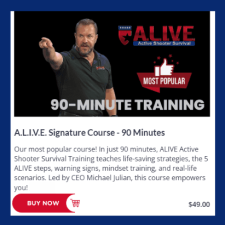
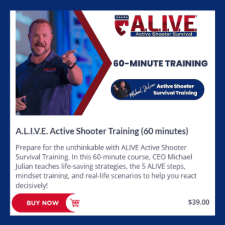
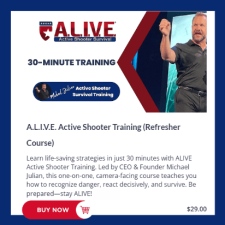
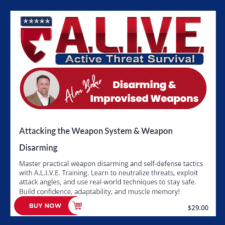
Online Active Shooter Training Courses
LEARN HOW TO SURVIVE AN ACTIVE SHOOTER!
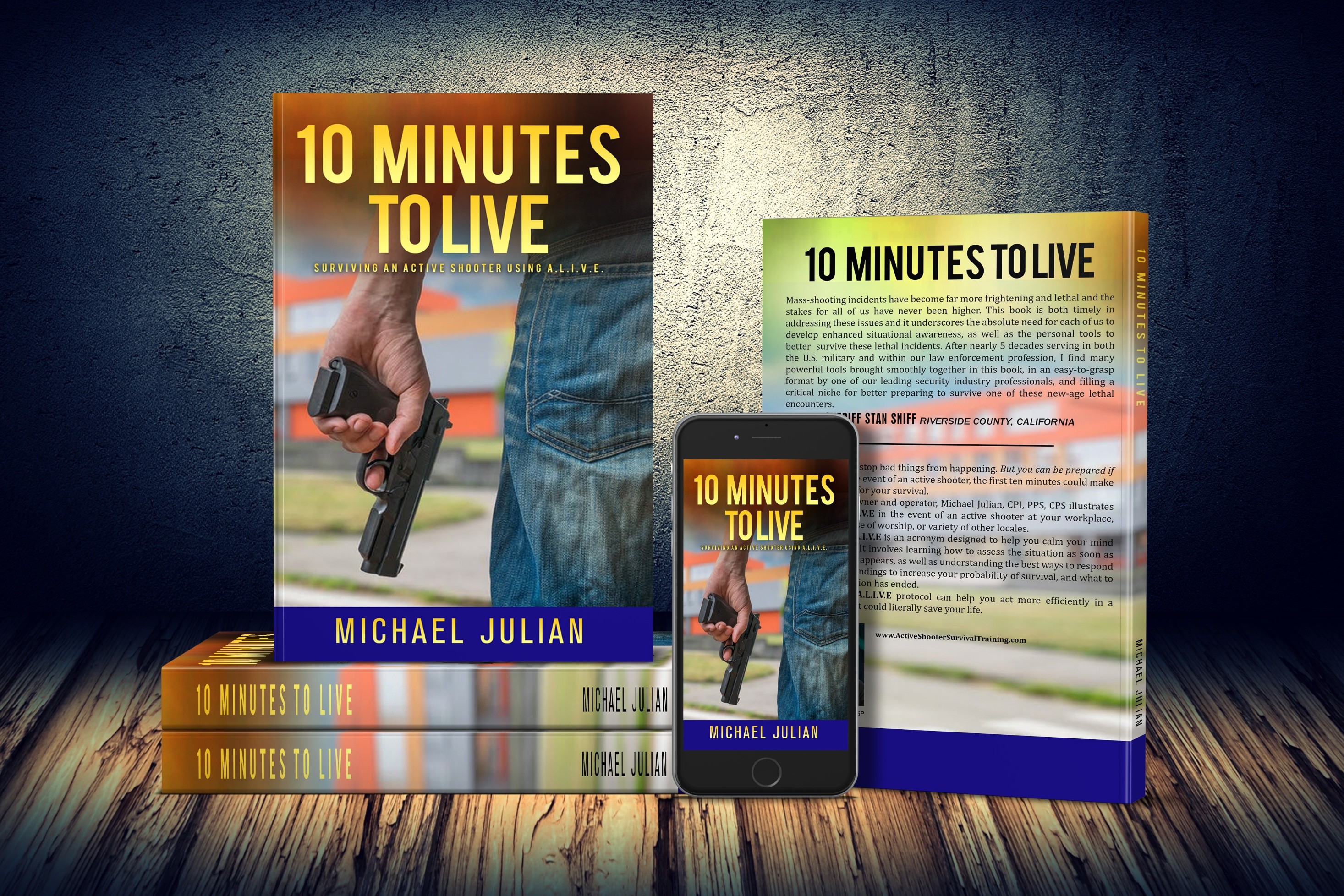
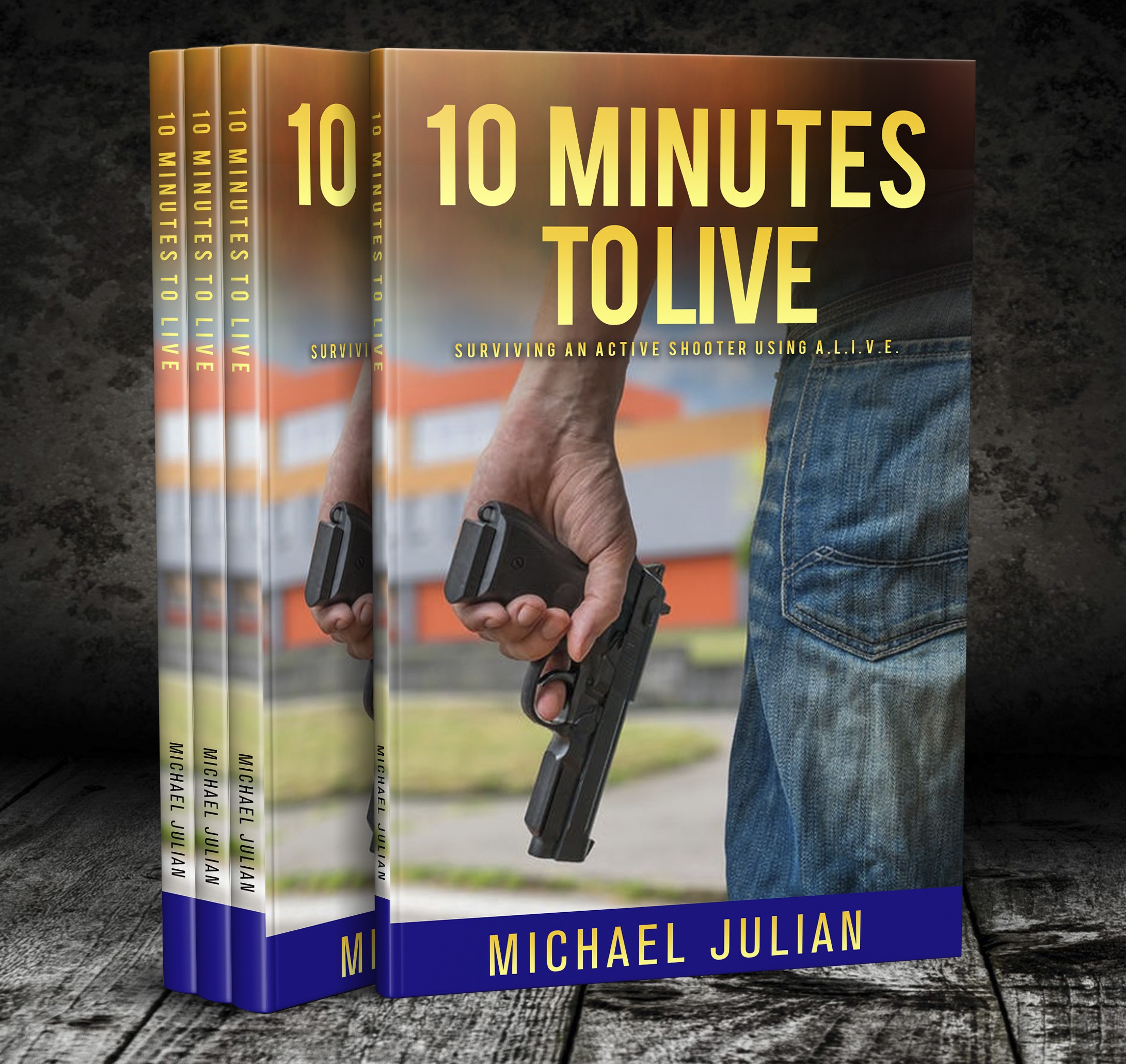
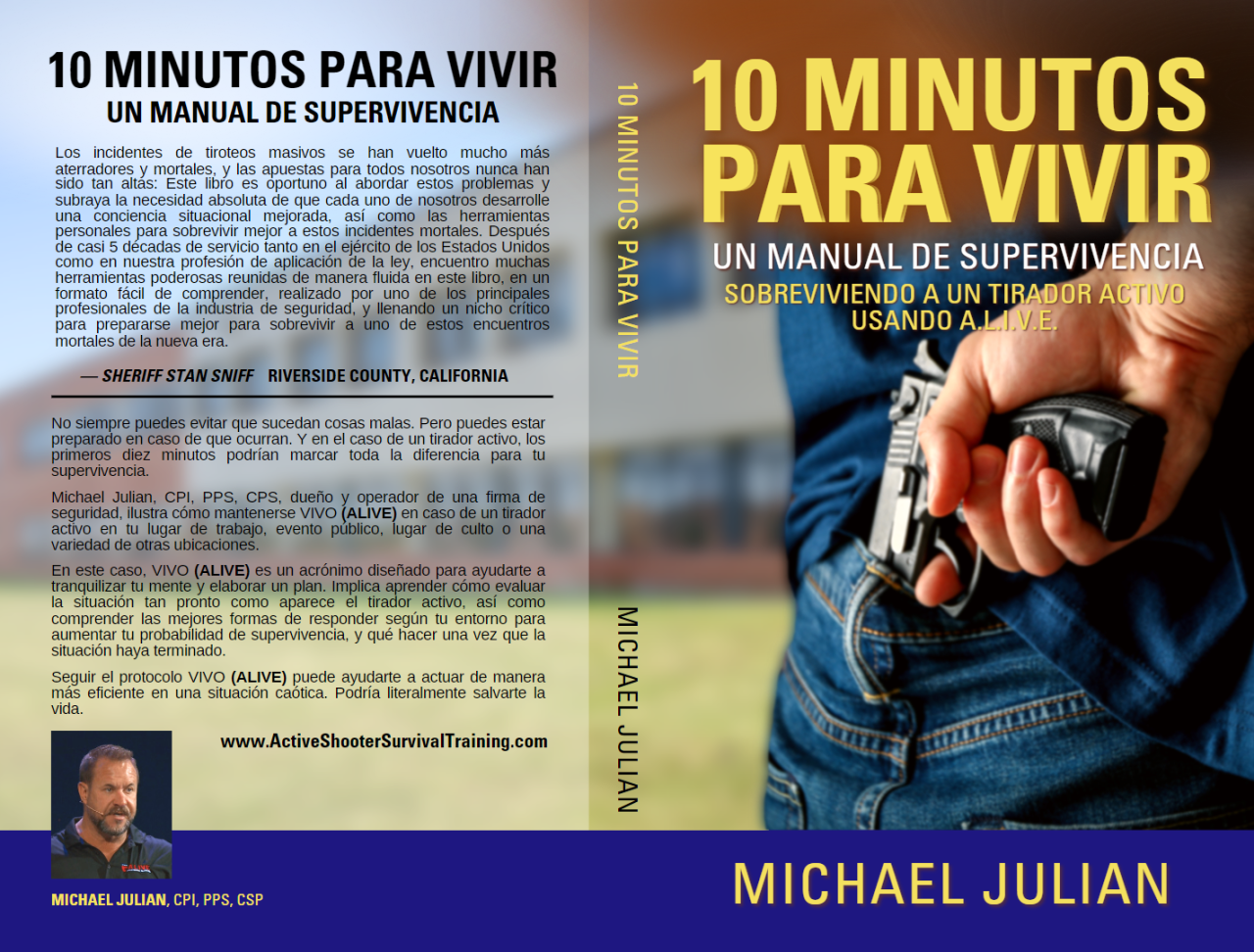
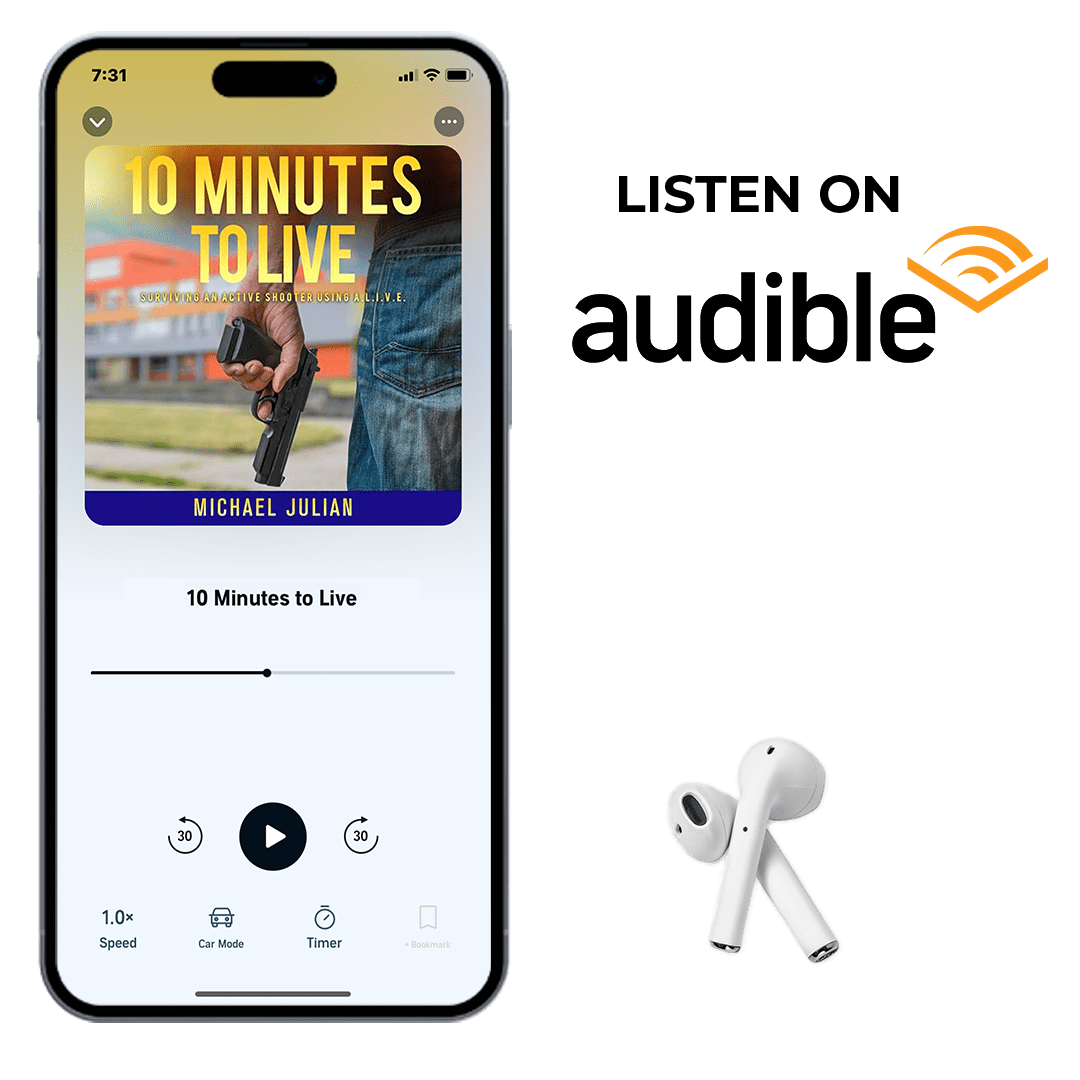
ALSO AVAILABLE FOR AUDIO DOWNLOAD, E-BOOK, AND PAPERBACK / HARDCOVER ON AMAZON

Hear From An A.L.I.V.E. Student Survivor Of The Las Vegas Massacre
"As a retired 32 year law enforcement veteran, with several years of SWAT and tactical experience, I learned some different unique perspectives as it pertains to civilians dealing with active threat situations. Very good class for civilians who may have never experienced reacting to a life and death stressful situation."
- Christopher C.
A.L.I.V.E. STANDS FOR:
Assess
Assess the situation quickly
Leave
Leave the area if you can
Impede
Impede the shooter
Violence
Violence may be necessary
Expose
Expose your position carefully for safety
INDUSTRIES WE SERVE
Corporations
Government
Healthcare
Places of worship
Schools & Universities
Venues
MICHAEL JULIAN
Creator of A.L.I.V.E.
A.L.I.V.E., which stands for Assess, Leave, Impede, Violence, and Expose, was created in 2014 when Michael began teaching his Active Shooter Survival philosophy throughout the United States. His book on the subject, 10 Minutes to Live: Surviving an Active Shooter Using A.L.I.V.E. was published in 2017 and the online version of the A.L.I.V.E. Training Program was launched in 2019 and is now part of the corporate security training program for companies throughout the world.

Why A.L.I.V.E. Active Shooter
Survival Training Program?
The A.L.I.V.E. Active Shooter Survival Training Program is a comprehensive training program designed to provide individuals with the necessary skills and knowledge to survive an active shooter incident. Its emphasis on situational awareness and decision-making makes it a practical and effective approach to active shooter situations. By empowering individuals to take proactive measures to protect themselves and others, the program can help prevent tragedies and save lives.