"Michael Julian has written an excellent book. Practical, detailed, and a potential life saver if you find yourself in the midst of a targeted attack."
Why People Freeze During an Active Shooter Event, and What Training Actually Changes
Freezing during an active shooter event is a normal, predictable response to ambiguous information under extreme stress, not a personal failure of courage. The brain pauses to answer a question it cannot yet answer - "what is actually happening?" - and that pause consumes the seconds that matter most.
In our 30 years of training people to survive violent events, this is the single most misunderstood part of the subject. Survivors describe it constantly. They heard something, they did not know what it was, and they stood still while their mind worked. Understanding why that happens is the first step toward shortening it.
Why does freezing happen at all?
A gunshot indoors does not sound like a gunshot in a movie. It echoes, it distorts, and in a warehouse, a mall, or an office it can register as a dropped pallet, a slammed door, or construction noise. The brain receives an incomplete signal and does what it is built to do: it searches memory for a match.
That search is fast when the situation is familiar and slow when it is not. Most people have no stored template for gunfire in their workplace, so there is nothing to match against. The result is a hold - orienting, looking around, waiting for a second data point.
What is normalcy bias, and why does it delay a response?
Normalcy bias is the tendency to interpret an ambiguous signal as the ordinary, expected explanation rather than the rare, dangerous one. It is not irrational. Nearly every loud noise in your life has had a harmless cause, so the harmless interpretation is statistically reasonable and cognitively cheap.
The problem is that normalcy bias is reinforced socially. People look at the coworkers around them for confirmation. If nobody else is reacting, the signal gets downgraded. Everyone in the room is doing the same calculation, so the group stays still while each individual waits for someone else to move first.
How long does it actually take people to start moving?
Longer than almost anyone expects. The National Institute of Standards and Technology's investigation of the World Trade Center evacuation documented that occupants engaged in what researchers call milling - gathering information, talking to others, and working out what was happening - before they began to evacuate (NIST, 2005). That behavior appears in fire research, in earthquake research, and in accounts of violent events. It is not specific to any one kind of emergency.
Meanwhile the event itself is not waiting. The FBI designated 34 active shooter incidents in the United States in 2025, and reported that nearly 68 percent of those incidents involved planning and preparation by the shooter, up from 58 percent the previous year (FBI, 2026). One side of these events is almost always prepared. The other side usually is not.
What does stress do to your senses and your hands?
Under a sudden threat, the body prioritizes. Heart rate climbs, peripheral vision narrows, and hearing can compress or drop out entirely for a period. Fine motor control degrades first, which is why people fumble a phone, a badge reader, or a door latch they have used a thousand times.
None of this can be trained away. What can change is how much thinking you have to do while it is happening. Complex decisions made under those conditions are unreliable. Simple, rehearsed actions hold up.
That gap is the practical reason how survival training differs from safety training matters so much. A safety briefing transfers information to a calm person sitting in a conference room. Survival training builds a response that a frightened person can still execute when their hands are shaking and they cannot hear well.
Can training change any of this?
It can shorten the pause. It cannot eliminate it, and any program that claims otherwise is overselling.
What effective training changes:
Recognition speed. Exposure to what gunfire actually sounds like in an enclosed space gives the brain a template to match.
Permission to act. People hesitate partly because acting alone feels socially costly. Training makes moving first the expected behavior rather than an overreaction.
Pre-made decisions. Where the exits are, where cover exists, and what you will do has been settled in advance rather than improvised.
Simplified action. Fewer choices, made in a specific order, survive stress better than a flowchart.
Recovery from the freeze. Trained people still freeze. They break out of it faster because they have felt the sensation before and know what it is.
What does a pre-made decision look like in practice?
It looks boring, and that is the point. It is knowing that the stairwell at the north end of your floor exits to the street and the one at the south end exits into a locked service corridor. It is knowing which doors in your building actually latch. It is having agreed, in advance, who calls 911 and who moves people.
None of that requires equipment or a large budget. It requires deciding before the day it matters, which is why the handful of steps worth deciding in advance is worth walking through with your team this quarter rather than next year. The decisions themselves are simple. Making them in the middle of an event is not.
Frequently asked questions
Is freezing during an emergency a sign of cowardice? No. Freezing is a normal neurological response to ambiguous, high-stress information, and it happens to trained professionals as well as untrained civilians. The relevant question is not whether you will freeze but how quickly you can move through it and act.
What is normalcy bias? Normalcy bias is the tendency to interpret an unusual signal as an ordinary, harmless event because that explanation is more familiar. In an active shooter event it delays recognition, because a gunshot is first assumed to be a dropped object, fireworks, or construction noise.
Can active shooter training stop someone from freezing? Training does not eliminate the freeze response, but it consistently shortens it. Recognizing the sound, having already decided on a course of action, and having practiced a simple physical response all reduce the amount of thinking required in the moment.
Why do people wait to see how others react? Humans use social confirmation to interpret ambiguous situations. If no one else in a room is reacting, each person downgrades the seriousness of what they heard, which is why entire groups can remain still for an extended period.
How often should a workplace revisit this kind of training? Short, periodic reinforcement works better than a single long session. Most organizations we work with schedule a refresher at least annually, with brief walkthroughs when floor plans, staffing, or exits change.
Does knowing the building really make a difference? Yes. Decisions made in advance - which exits work, which doors latch, where cover exists - do not have to be made under stress, and stress is exactly when complex decision making becomes unreliable.
Talk to us about training your people
If your organization has covered active shooter response in a slide deck and never gone further, the gap between knowing and doing is still there. A.L.I.V.E. Active Shooter Survival Training builds options-based response that holds up under real stress, for schools, workplaces, houses of worship, and public venues. Contact us to talk about what your team needs.
About the author
Michael D. Julian is the creator of the A.L.I.V.E. Active Shooter Survival Training program and has more than 30 years of experience in security, investigations, and threat response. He served as President of the California Association of Licensed Investigators from 2005 to 2015 and has trained schools, corporations, houses of worship, and public agencies across the country. Connect with him on LinkedIn.
LEARN HOW TO SURVIVE AN ACTIVE SHOOTER!
ALSO AVAILABLE FOR AUDIO DOWNLOAD, E-BOOK, AND PAPERBACK / HARDCOVER ON AMAZON

Hear From An A.L.I.V.E. Student Survivor Of The Las Vegas Massacre
"As a retired 32 year law enforcement veteran, with several years of SWAT and tactical experience, I learned some different unique perspectives as it pertains to civilians dealing with active threat situations. Very good class for civilians who may have never experienced reacting to a life and death stressful situation."
- Christopher C.
A.L.I.V.E. STANDS FOR:
Assess
Assess the situation quickly
Leave
Leave the area if you can
Impede
Impede the shooter
Violence
Violence may be necessary
Expose
Expose your position carefully for safety
INDUSTRIES WE SERVE
Corporations
Government
Healthcare
Places of worship
Schools & Universities
Venues
MICHAEL JULIAN
Creator of A.L.I.V.E.
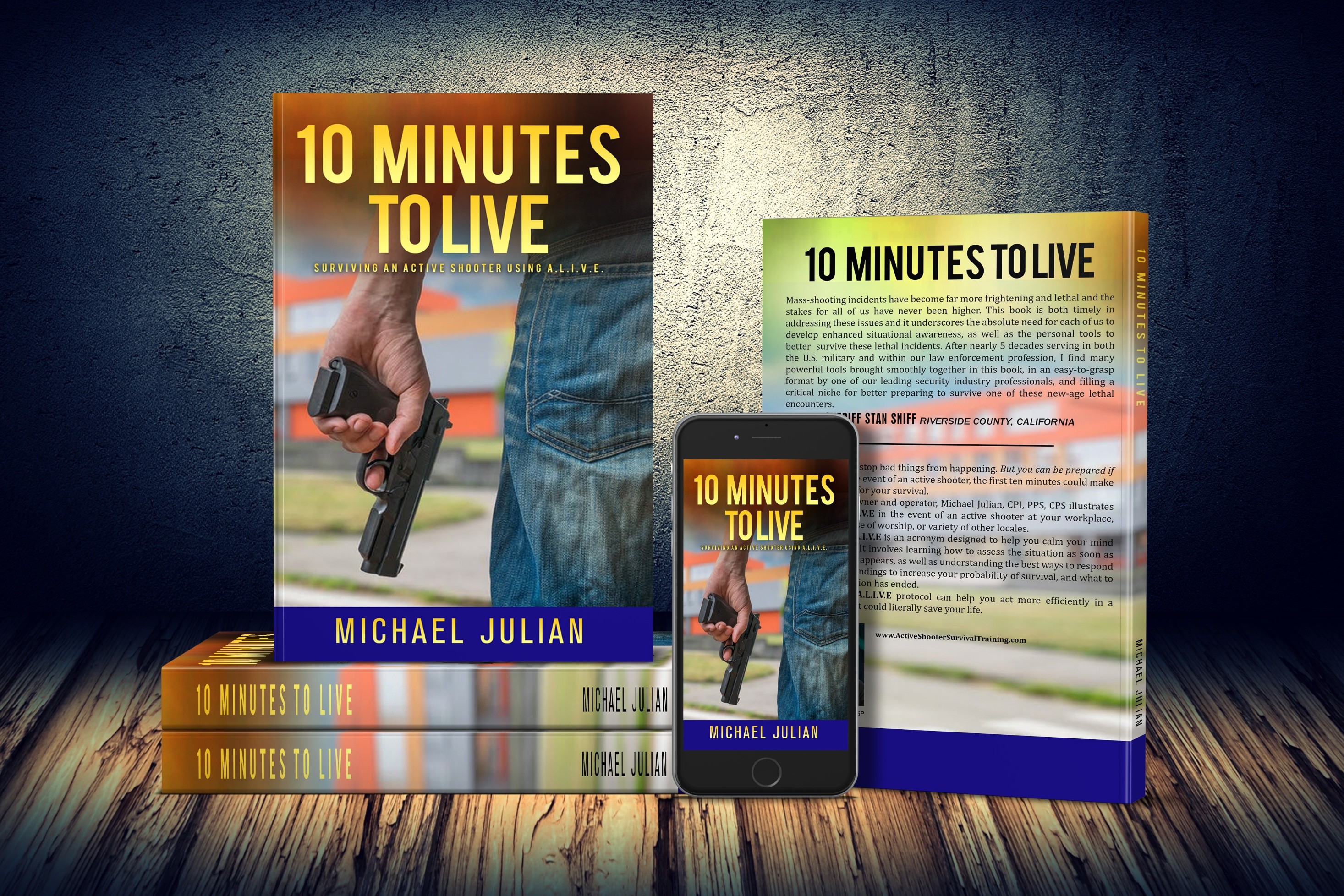
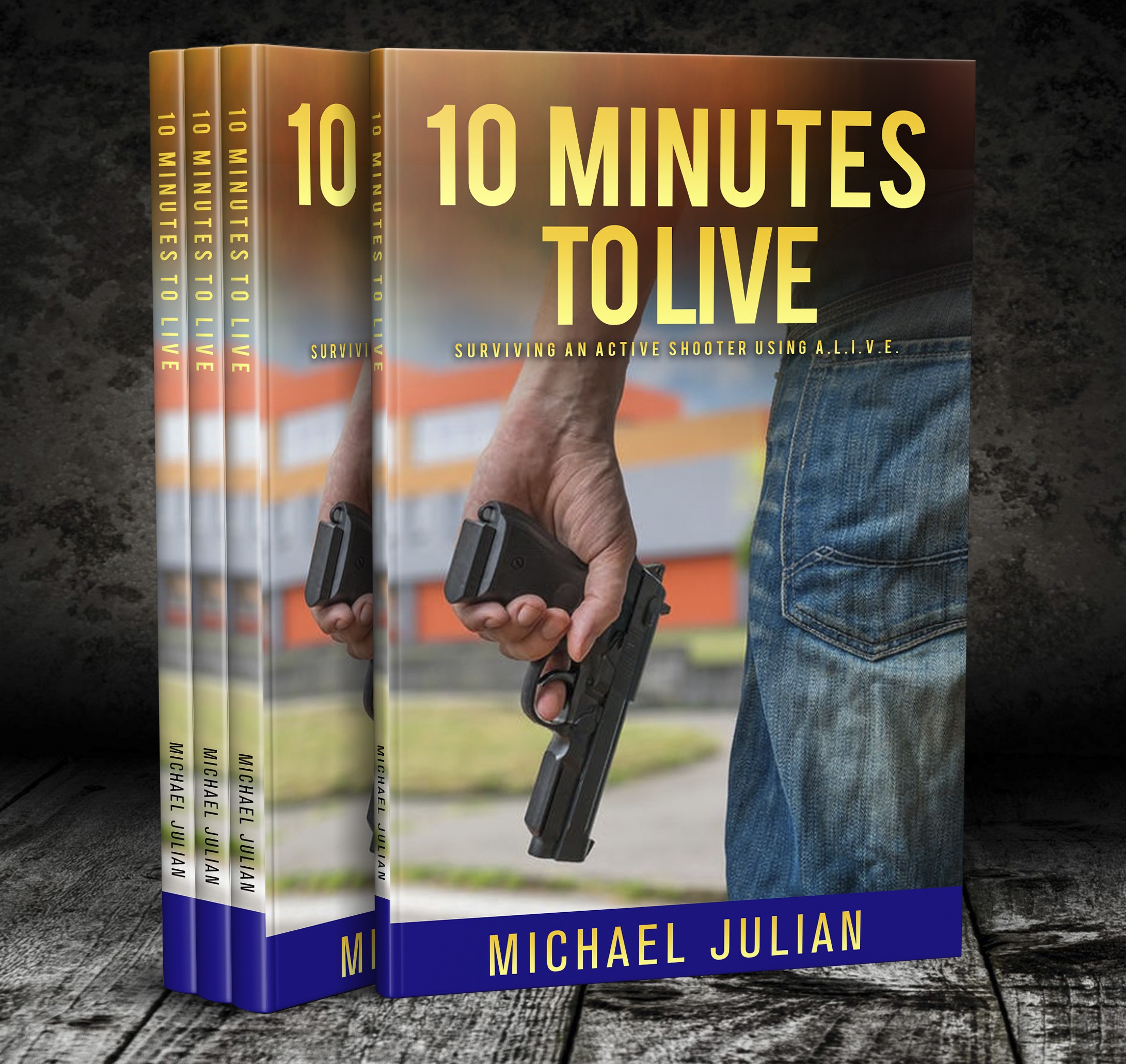
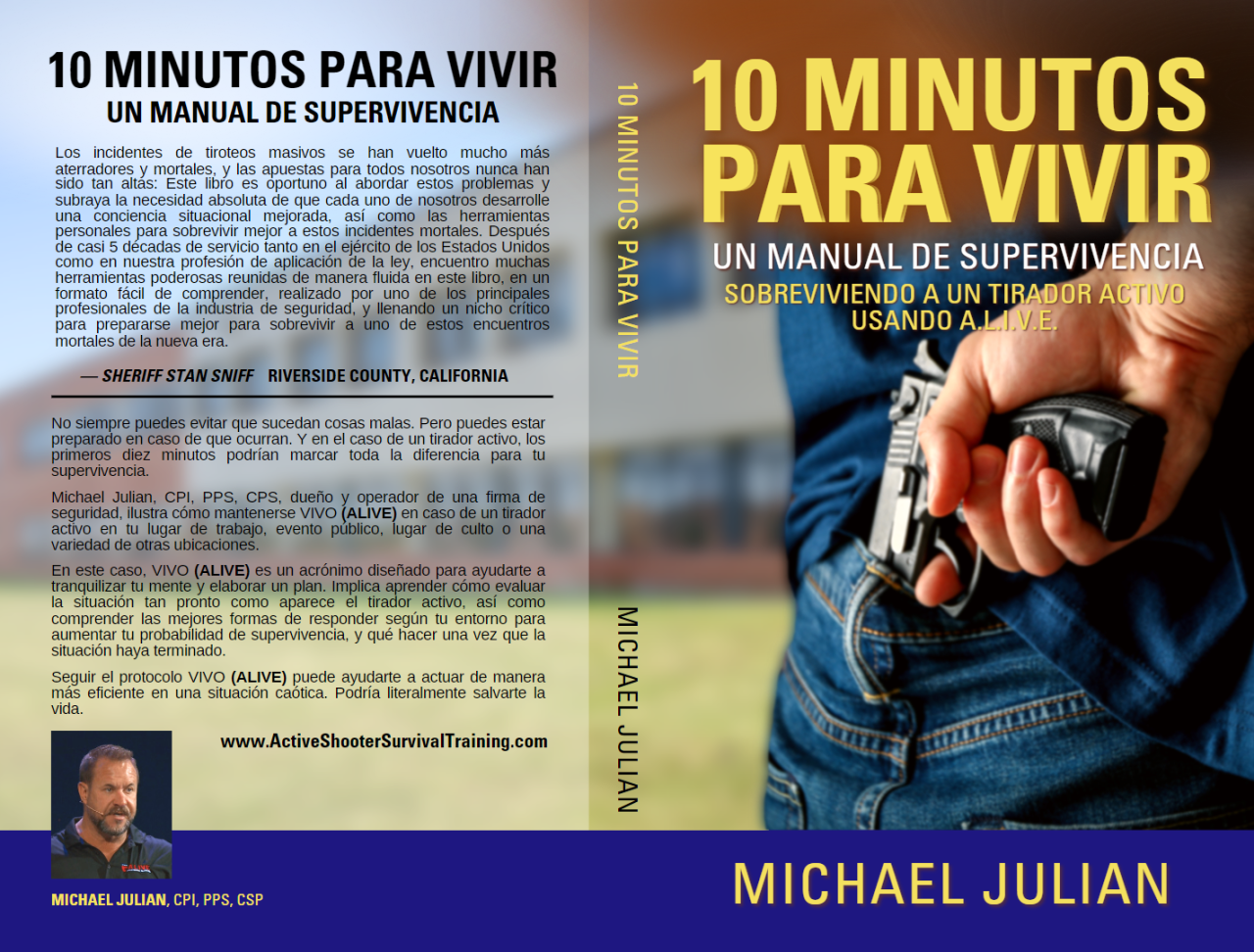
A.L.I.V.E., which stands for Assess, Leave, Impede, Violence, and Expose, was created in 2014 when Michael began teaching his Active Shooter Survival philosophy throughout the United States. His book on the subject, 10 Minutes to Live: Surviving an Active Shooter Using A.L.I.V.E. was published in 2017 and the online version of the A.L.I.V.E. Training Program was launched in 2019 and is now part of the corporate security training program for companies throughout the world.
Why A.L.I.V.E. Active Shooter
Survival Training Program?
The A.L.I.V.E. Active Shooter Survival Training Program is a comprehensive training program designed to provide individuals with the necessary skills and knowledge to survive an active shooter incident. Its emphasis on situational awareness and decision-making makes it a practical and effective approach to active shooter situations. By empowering individuals to take proactive measures to protect themselves and others, the program can help prevent tragedies and save lives.