
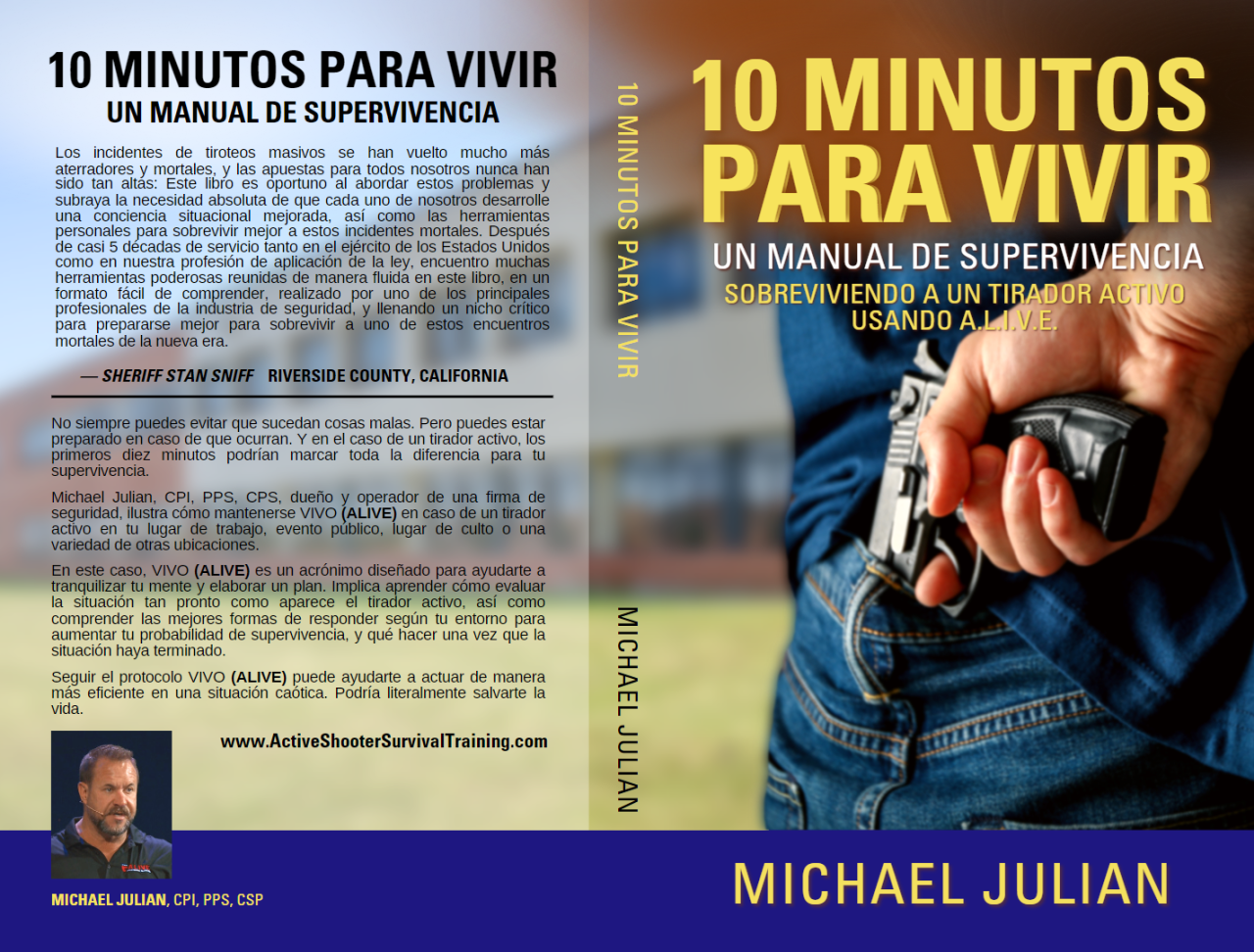
"Michael Julian has written an excellent book. Practical, detailed, and a potential life saver if you find yourself in the midst of a targeted attack."
Workplace Violence Incident Reporting
Please complete this questionnaire to the best of your ability. Your responses are entirely anonymous and confidential.
This information will be used to improve your workplace and address any issues that may arise.
Workplace Violence: Reporting, Prevention, and Training
Workplace violence is now one of the leading causes of occupational injury in the United States. OSHA classifies it into four types - criminal intent, customer/patient/client violence, worker-on-worker, and personal-relationship violence brought into the workplace - and the general-duty clause requires every employer to take reasonable steps to prevent each type. ALIVE workplace violence training combines incident-reporting best practices, behavioral threat assessment fundamentals, and the proven five-step ALIVE active shooter survival method into a single, credible program.
Compliance is part of the picture. California's SB 553 now requires a written Workplace Violence Prevention Plan, training, an incident log, and annual review for nearly every California employer. Other states are moving in similar directions. ALIVE provides a free SB 553 plan template, supports SB 553 workplace violence prevention training, and pairs cleanly with workplace active shooter response drills.
From Reporting to Response
Effective workplace violence prevention is a continuous loop: clear reporting channels feed behavioral threat assessment, which informs training and physical-security improvements, which inform after-action review and program updates. ALIVE supports every stage - from physical security audits through in-person training.
Frequently Asked Questions
What counts as workplace violence?
OSHA recognizes four types of workplace violence: Type 1 (criminal intent - robbery, etc.), Type 2 (customer/client/patient violence), Type 3 (worker-on-worker), and Type 4 (personal-relationship violence brought into the workplace).
Are employers legally required to address workplace violence?
Yes. OSHA's general-duty clause requires employers to provide a workplace free from recognized hazards, and many states (notably California SB 553) now require a written Workplace Violence Prevention Plan and training.
How should I report a workplace violence incident?
Use your employer's reporting channel - most plans require a written incident log entry, supervisor notification, and (when warranted) law enforcement contact. ALIVE's free SB 553 download includes an incident-log template.
How does training reduce workplace violence?
Training builds awareness of warning signs, de-escalation skills, reporting habits, and decisive response if violence occurs. Online and in-person programs work together for full coverage.
What about behavioral threat assessment?
Behavioral threat assessment is a structured way of evaluating concerning behavior before it escalates. ALIVE incorporates the basics into all of its workplace violence prevention training programs.
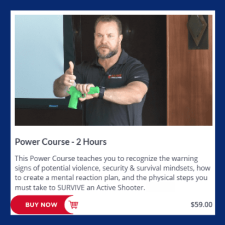
Online Active Shooter Training Courses
LEARN HOW TO SURVIVE AN ACTIVE SHOOTER!
ALSO AVAILABLE FOR AUDIO DOWNLOAD, E-BOOK, AND PAPERBACK / HARDCOVER ON AMAZON




Hear From An A.L.I.V.E. Student Survivor Of The Las Vegas Massacre
"As a retired 32 year law enforcement veteran, with several years of SWAT and tactical experience, I learned some different unique perspectives as it pertains to civilians dealing with active threat situations. Very good class for civilians who may have never experienced reacting to a life and death stressful situation."
- Christopher C.
A.L.I.V.E. STANDS FOR:
Assess
Assess the situation quickly
Leave
Leave the area if you can
Impede
Impede the shooter
Violence
Violence may be necessary
Expose
Expose your position carefully for safety
INDUSTRIES WE SERVE
Corporations
Government
Healthcare
Places of worship
Schools & Universities
Venues
MICHAEL JULIAN
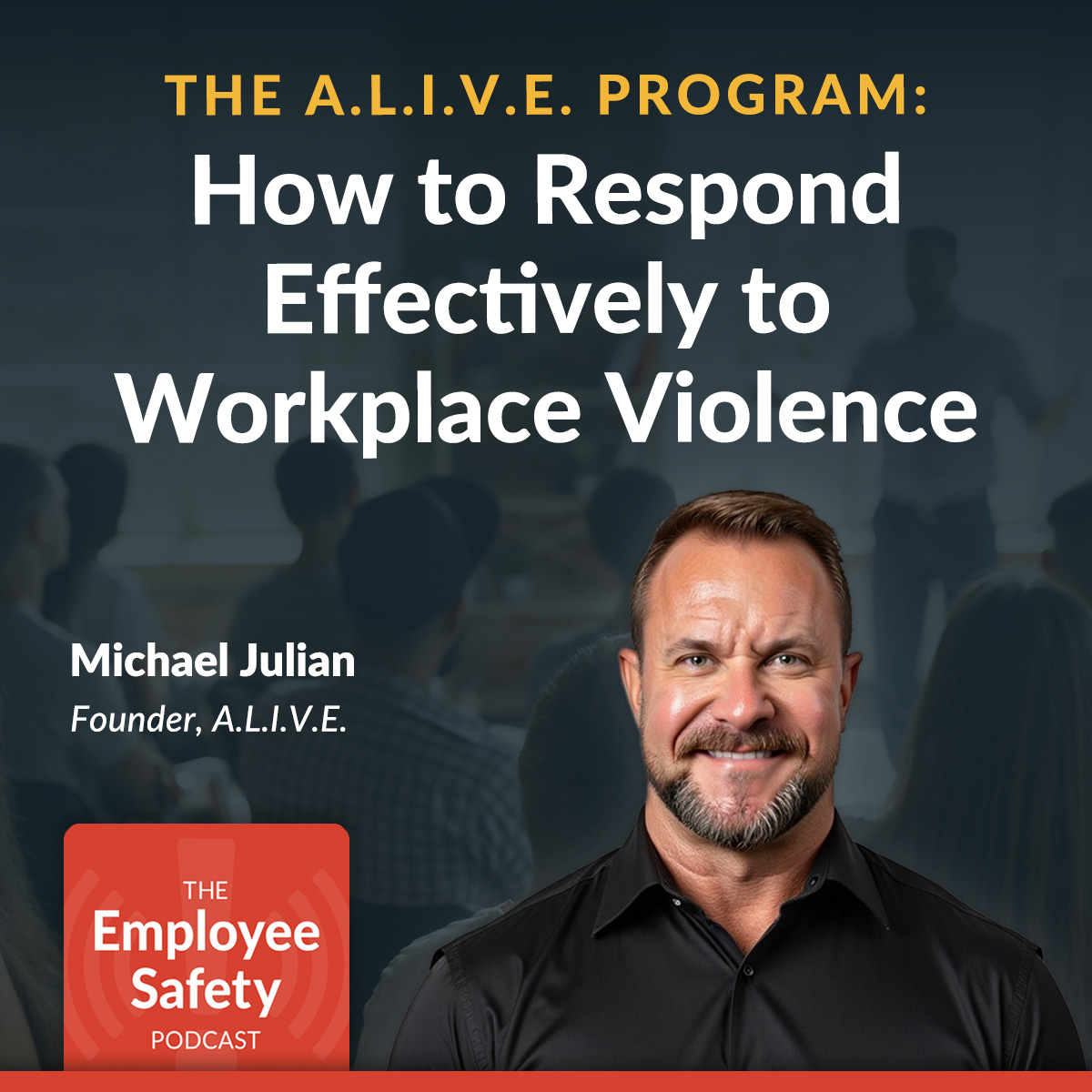
Creator of A.L.I.V.E.
A.L.I.V.E., which stands for Assess, Leave, Impede, Violence, and Expose, was created in 2014 when Michael began teaching his Active Shooter Survival philosophy throughout the United States. His book on the subject, 10 Minutes to Live: Surviving an Active Shooter Using A.L.I.V.E. was published in 2017 and the online version of the A.L.I.V.E. Training Program was launched in 2019 and is now part of the corporate security training program for companies throughout the world.

Why A.L.I.V.E. Active Shooter
Survival Training Program?
The A.L.I.V.E. Active Shooter Survival Training Program is a comprehensive training program designed to provide individuals with the necessary skills and knowledge to survive an active shooter incident. Its emphasis on situational awareness and decision-making makes it a practical and effective approach to active shooter situations. By empowering individuals to take proactive measures to protect themselves and others, the program can help prevent tragedies and save lives.