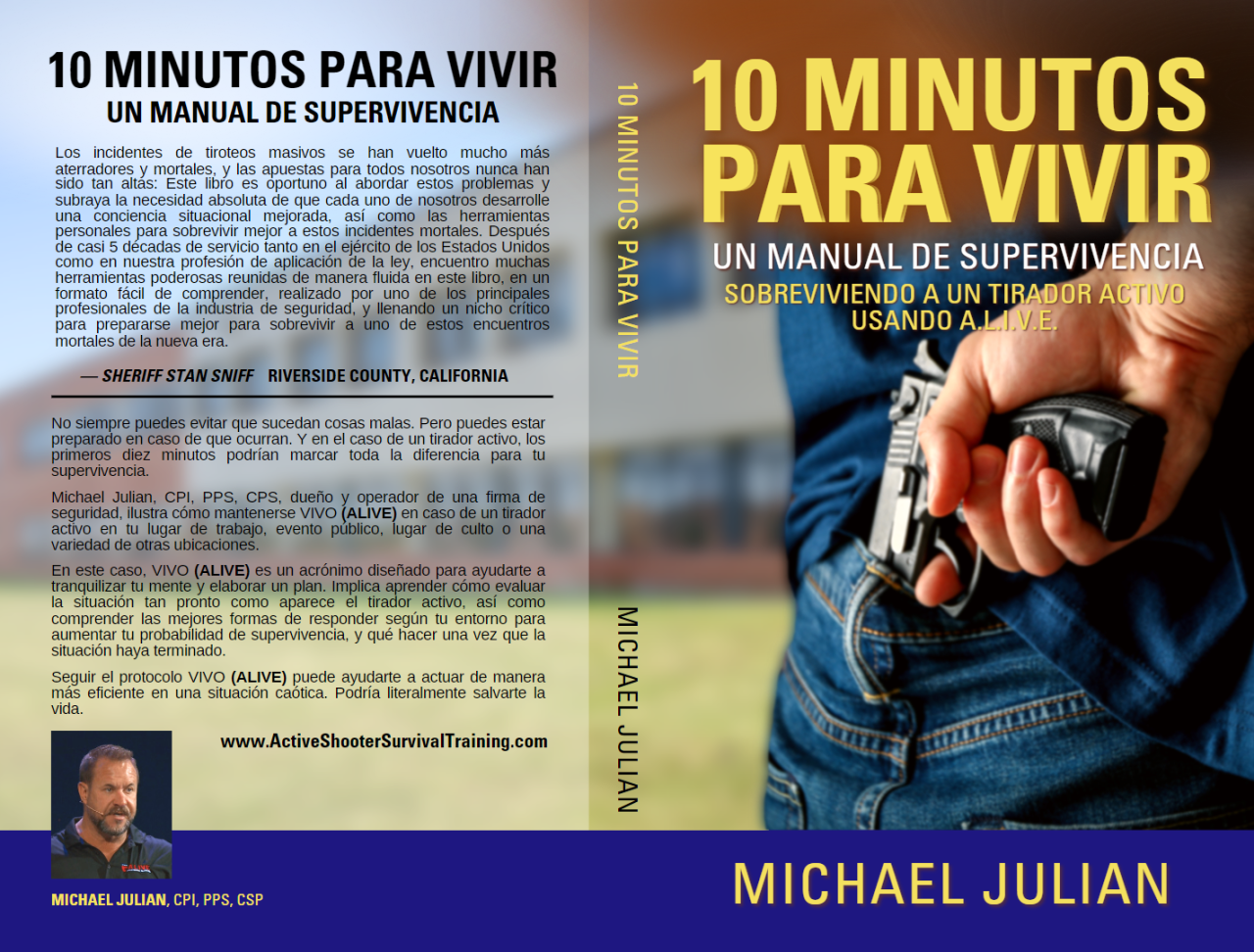
"Michael Julian has written an excellent book. Practical, detailed, and a potential life saver if you find yourself in the midst of a targeted attack."
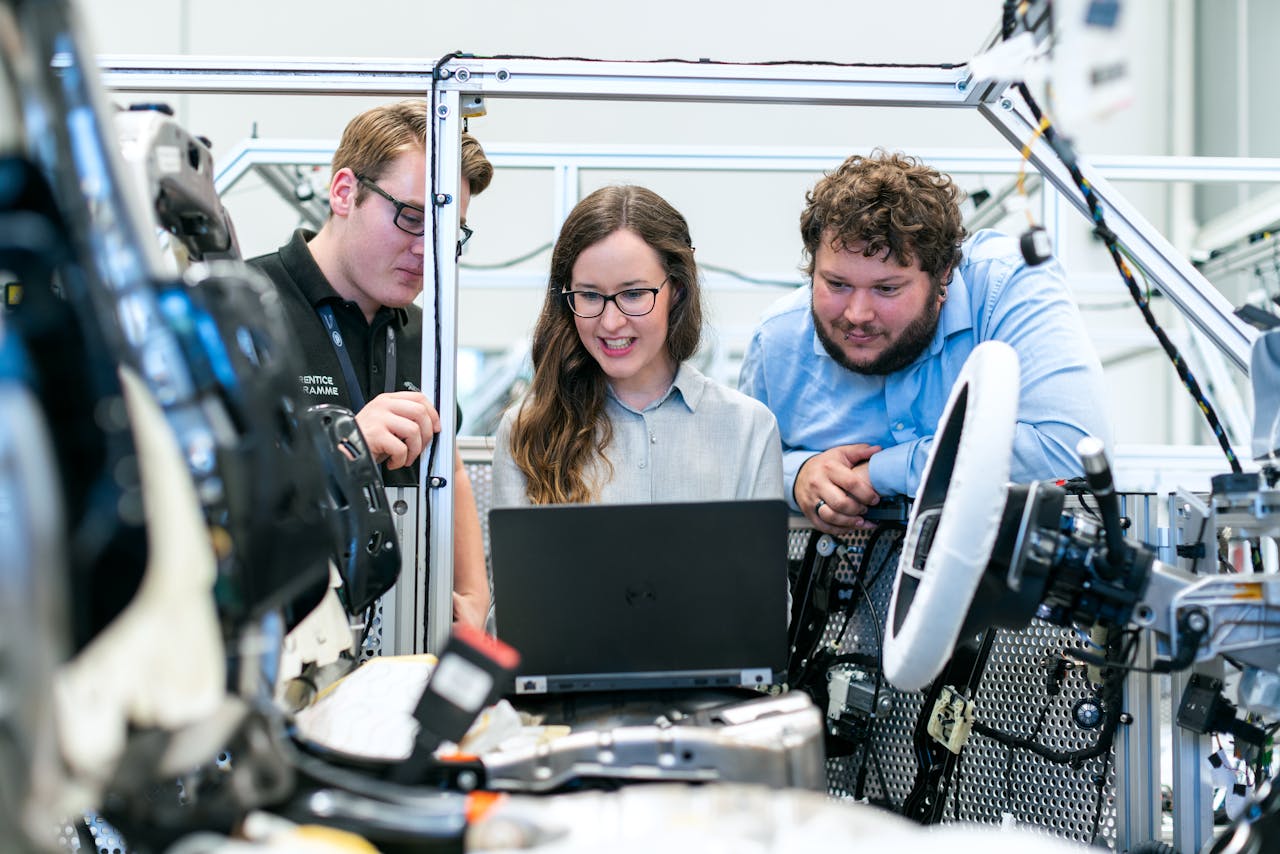
Active Shooter Training for Manufacturing and Industrial Facilities: A 2026 Preparedness Guide for Plant Managers
Active shooter training for manufacturing and industrial facilities is a structured preparedness program that teaches plant managers, line supervisors, production-floor workers, contracted maintenance teams, and on-site security how to detect warning signs, protect personnel, and respond decisively to a targeted-violence event in a noisy, equipment-dense, multi-shift industrial environment. It adapts the A.L.I.V.E. response framework - Alert, Lockdown, Inform, Vacate, Engage - to the realities of a plant floor: long sightlines broken by heavy machinery, ambient noise that defeats verbal commands, limited cellular reception in steel-roofed buildings, and a workforce that turns over across three shifts. In our 30 years training organizations across the country, we have found that manufacturers who run a layout-specific drill program move from frozen to functional several minutes faster than plants relying on a generic corporate template - and in this scenario, minutes are everything.
Why manufacturing plants are uniquely difficult to train
Most plant emergency plans were written for fire, chemical release, and lockout-tagout incidents, not targeted violence against people. They assume a single supervised population that can hear an alarm and walk to an assembly point. A working production floor breaks every one of those assumptions. Ambient noise from CNC cells, presses, conveyors, HVAC, and forklift traffic regularly reaches 85 to 95 dB - well above the level where a shouted instruction or a standard PA announcement carries. Hearing protection compounds it. Workers wearing foam plugs or earmuffs may not register a public-address alert at all unless the system has been engineered for that environment.
The footprint is also unusually large and unusually segmented. A single facility may include a fabrication bay, an assembly line, a paint or coating room, a packaging area, a warehouse with mezzanines, a shipping dock with continuous truck access, and a separate front-office building - each with its own crew, its own supervisor, and its own ingress and egress logic. A response plan that treats the building as one undifferentiated population will fail on day one.
The threat picture is real. The Federal Bureau of Investigation documented 24 active shooter incidents in 2024, with the largest single share - 38% - occurring in commerce environments and the next largest share occurring in open spaces and workplaces (FBI, 2025). The Bureau of Labor Statistics reports that workplace homicide remained one of the leading causes of fatal occupational injury, with 740 workplace homicides recorded in 2022 across U.S. industries (BLS, 2023). The Occupational Safety and Health Administration treats workplace violence in manufacturing and warehousing as a recognized hazard subject to enforcement under the General Duty Clause, and recommends written prevention programs and training as the baseline of compliance (OSHA, 2024).
What active shooter training for manufacturers actually covers
A well-designed plant program is built around the property’s actual layout, shift schedule, and on-the-floor roles. The same preparation built for any workplace with public access gets adapted to the way an industrial site really runs. A typical curriculum addresses:
• Production-floor response under noise: how to recognize a non-verbal alert (strobes, evacuation tones, designated radio codes), where to take cover behind machinery, and which bays offer hard cover versus soft cover.
• Shift-supervisor roles: every shift needs a designated person trained to make the run/hide/fight decision for the team in front of them, communicate to the rest of the floor, and account for personnel afterward.
• Office, lab, and front-of-house lockdown: separate protocol for the administrative wing, R&D space, and reception area where a threat is most likely to enter first.
• Shipping, receiving, and yard procedures: truck drivers, yard jockeys, and dock workers are often outside the building when an incident begins and need their own protocol - not a default re-entry that brings them toward the threat.
• Contractor and temp-staff inclusion: maintenance contractors, sanitation crews, and temporary line workers must be briefed on the property’s specific response within the first hour of arrival.
• Pre-attack indicators specific to industrial settings: repeated threats during disciplinary actions, escalating behavior after layoffs or terminations, suspicious surveillance of shift changes - these are the warning signs that precede an attack and the ones a shift supervisor is in the best position to observe.
How to integrate training with existing EHS and HR programs
The plants that get this right do not bolt active shooter training onto an unrelated safety calendar. They integrate it with the existing environmental, health, and safety (EHS) program and the HR workplace-violence-prevention policy. A defensible structure includes:
1. A written workplace violence prevention plan that explicitly addresses targeted violence (not just bullying, harassment, or generic disputes).
2. An instructor-led training cycle with new-hire training within 30 days of start date and annual refreshers tied to the EHS calendar.
3. A drill program that runs at least one tabletop exercise per quarter and one live walkthrough per year, ideally on each shift to capture night and weekend crew dynamics.
4. A reporting channel for early indicators that routes to a small, trained behavioral threat assessment team - usually HR, EHS, plant security, and one operations leader.
Working with corporate risk, insurance, and OSHA expectations
Manufacturing carriers and corporate risk teams increasingly require documented active-shooter preparedness as a condition of coverage, and OSHA inspectors now routinely ask for it during workplace-violence-prevention audits. A defensible training record - instructor name, date of session, attendee roster by shift, drill outcomes, corrective actions - is now standard documentation in liability defense after a violent incident. Plants that can produce a multi-year drill record are in a markedly stronger position than those producing a one-page binder after the fact.
Frequently asked questions
What is the best active shooter training for manufacturing facilities?
The best programs are layout-specific, shift-aware, and delivered in person by certified instructors. A.L.I.V.E. training adapts its core framework - Alert, Lockdown, Inform, Vacate, Engage - to the plant’s actual floor plans, machinery layout, and shift schedule, and trains supervisors, line workers, office staff, and shipping/receiving crews on the role each plays in the first 90 seconds of an incident.
How long does plant active shooter training take?
A full instructor-led training session for a single facility typically runs three to four hours and is repeated for each shift so night and weekend crews receive the same instruction. Larger plants often split training across multiple sessions - one for leadership and EHS, one for line and floor staff, one for office staff - followed by a tabletop or live drill. Refresher training runs about 60 to 90 minutes.
Are manufacturers required by law to provide active shooter training?
There is no single federal mandate, but OSHA has used the General Duty Clause to cite employers who failed to address known workplace-violence hazards, and several states (notably California and New York) now require written workplace-violence-prevention plans that include training. Most large industrial insurance carriers also require documented training as a contractual condition.
What should a production worker do during an active shooter incident?
Follow the Run, Hide, Fight framework adapted to the plant: evacuate through a known safe egress if a clear route exists, take hard cover behind machinery and lock down in a windowless space if not, and engage only as an absolute last resort. Plant staff trained in A.L.I.V.E. learn to make that decision based on the bay they are in, not a one-size script for the whole building.
Can A.L.I.V.E. train across multiple facilities for a single manufacturer?
Yes. We routinely train regional and national manufacturing operations, including multi-plant deployments coordinated through corporate EHS or risk-management teams. Training can be delivered on-site at a flagship facility with regional plant managers attending, or rolled out plant-by-plant across an entire portfolio.
How often should manufacturing staff retrain?
The most defensible cadence is an instructor-led training within 30 days of hire, a tabletop refresher every six months, and a live walkthrough drill annually - repeated for every shift so the same training reaches first, second, and third shift crews equally.
Take the next step toward a defensible plant preparedness program
If you operate or oversee a manufacturing facility, industrial site, or warehouse and are evaluating active shooter preparedness for 2026, A.L.I.V.E. delivers in-person, layout-specific training built around the way your plant actually runs - not a generic corporate webinar. Contact A.L.I.V.E. Active Shooter Survival Training to schedule a facility assessment and instructor-led session for every shift on your property.
About the Author
Michael D. Julian is the founder of A.L.I.V.E. Active Shooter Survival Training and brings 30+ years of security and protective-services leadership to active shooter preparedness. He served as President of the California Association of Licensed Investigators (CALI) from 2005 to 2015 and is the creator of the A.L.I.V.E. response framework now used by schools, healthcare systems, hospitality operators, and corporations across the United States. Connect with Michael on LinkedIn.
LEARN HOW TO SURVIVE AN ACTIVE SHOOTER!
ALSO AVAILABLE FOR AUDIO DOWNLOAD, E-BOOK, AND PAPERBACK / HARDCOVER ON AMAZON




Hear From An A.L.I.V.E. Student Survivor Of The Las Vegas Massacre
"As a retired 32 year law enforcement veteran, with several years of SWAT and tactical experience, I learned some different unique perspectives as it pertains to civilians dealing with active threat situations. Very good class for civilians who may have never experienced reacting to a life and death stressful situation."
- Christopher C.
A.L.I.V.E. STANDS FOR:
Assess
Assess the situation quickly
Leave
Leave the area if you can
Impede
Impede the shooter
Violence
Violence may be necessary
Expose
Expose your position carefully for safety
INDUSTRIES WE SERVE
Corporations
Government
Healthcare
Places of worship
Schools & Universities
Venues
MICHAEL JULIAN
Creator of A.L.I.V.E.
A.L.I.V.E., which stands for Assess, Leave, Impede, Violence, and Expose, was created in 2014 when Michael began teaching his Active Shooter Survival philosophy throughout the United States. His book on the subject, 10 Minutes to Live: Surviving an Active Shooter Using A.L.I.V.E. was published in 2017 and the online version of the A.L.I.V.E. Training Program was launched in 2019 and is now part of the corporate security training program for companies throughout the world.

Why A.L.I.V.E. Active Shooter
Survival Training Program?
The A.L.I.V.E. Active Shooter Survival Training Program is a comprehensive training program designed to provide individuals with the necessary skills and knowledge to survive an active shooter incident. Its emphasis on situational awareness and decision-making makes it a practical and effective approach to active shooter situations. By empowering individuals to take proactive measures to protect themselves and others, the program can help prevent tragedies and save lives.