"Michael Julian has written an excellent book. Practical, detailed, and a potential life saver if you find yourself in the midst of a targeted attack."
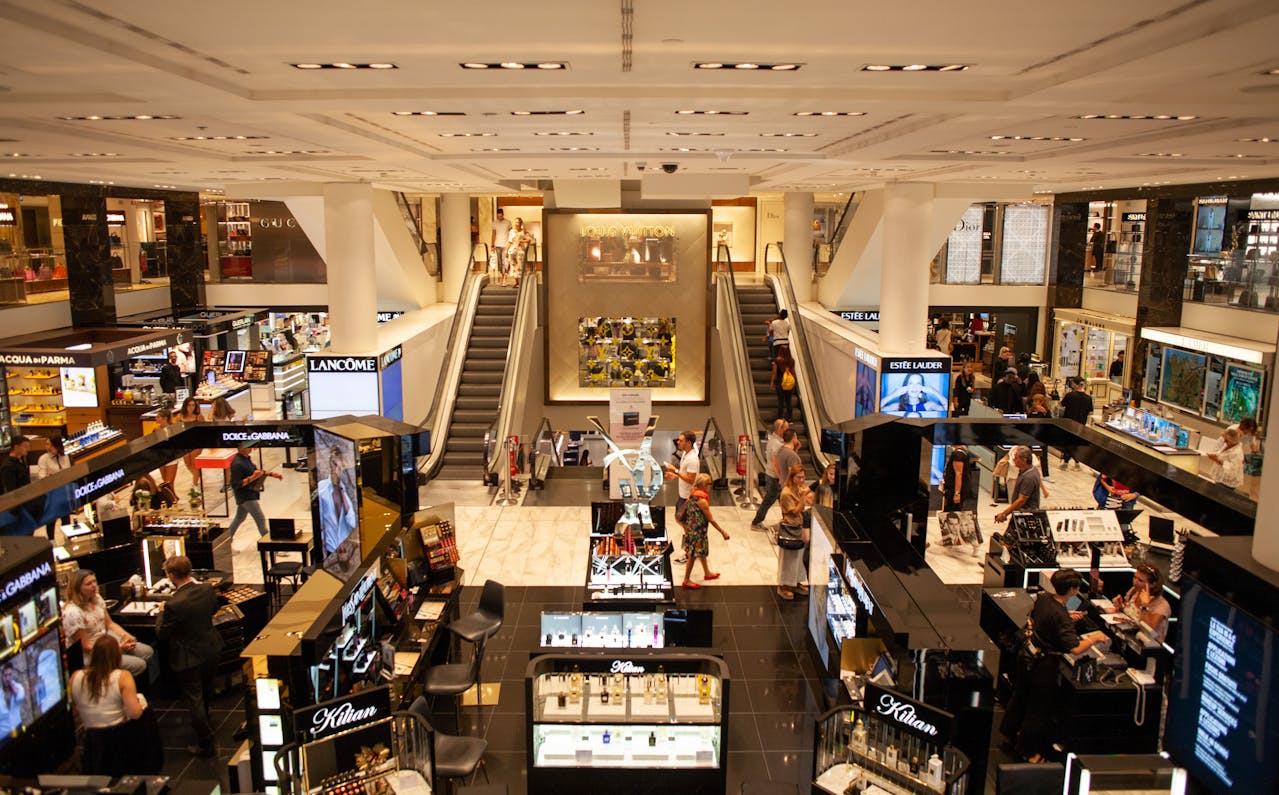
Active Shooter Training for Retail Stores and Shopping Centers: Protecting Customers and Staff in 2026
Active shooter training for retail stores and shopping centers is a structured preparedness program that teaches managers, frontline associates, and security staff how to recognize warning signs, control crowd movement, and protect customers and employees during a targeted-violence event. It adapts the A.L.I.V.E. response framework - Alert, Lockdown, Inform, Vacate, Engage - to the open-floor, high-foot-traffic, multi-tenant reality of retail environments. In our 30 years training organizations across the country, we have seen retail consistently lag schools, healthcare, and corporate offices in preparedness, even though retail accounts for one of the largest shares of customer-facing violent incidents in the United States.
Why retail is a uniquely difficult environment to protect
Retail is built for one thing: low-friction access. Customers walk in unannounced, browse without identification, and leave at will. That’s the business model. It is also why standard “lockdown” guidance written for schools or offices does not translate cleanly to a 120,000-square-foot mall or a freestanding big-box store with eight unsecured entrances.
A modern retail floor combines several risk factors at once: high transient occupancy, mixed-age crowds (including children separated from parents), employees who often have less than 90 days on the job, and security staffing levels that are typically lean and contracted rather than in-house. Add seasonal volume spikes - holidays, back-to-school, Black Friday, end-of-school graduations - and the operating picture changes weekly.
The threat picture has been intensifying. According to the Federal Bureau of Investigation, 17% of active shooter incidents in 2024 occurred in commerce locations such as retail stores and shopping centers (FBI, 2025). Even more concerning for day-to-day operations, the National Retail Federation reports that threats or acts of violence during shoplifting and theft events increased 17% between 2023 and 2024 (NRF, 2025). Most retail violence is not an active-shooter event - but the same warning-sign recognition and response skills are what move staff from frozen to functional in either case.
What active shooter training for retail actually covers
A well-designed retail program looks different from a school or corporate program. It usually includes:
• Customer-flow control: how to close, route, or hide customers behind movable shelving, fitting rooms, or stockroom doors when seconds matter.
• Multi-tenant coordination: mall-anchor vs. inline tenant responsibilities, common-area emergency communications, and synchronized response with mall security and local PD.
• Pre-attack indicators specific to retail: loitering near exits, suspicious questions to associates about closing times or staffing, surveillance behavior on prior visits.
• De-escalation for the high-frequency events that are not active shooter incidents - combative shoplifters, domestic-violence spillover, and intoxicated or mental-health crisis behaviors that retail staff face weekly.
• Run, Hide, Fight applied to retail: the well-known DHS framework adapted to specific store layouts, hard-corner identification, barricade options, and engagement-of-last-resort training.
The Department of Homeland Security’s Cybersecurity and Infrastructure Security Agency (CISA) maintains an active-shooter preparedness library that aligns with this approach and is widely cited as the federal voluntary standard (CISA, 2024).
How long does training take, and how often should it be refreshed?
A foundational A.L.I.V.E. course for a retail location is typically a 4-to-6-hour classroom session plus a store walk-through and one live drill. For multi-store operators, that initial session is best run in waves - store managers and assistant managers first, then frontline associates in shorter store-level reinforcement sessions.
The single biggest mistake retailers make is treating the initial session as the whole program. Skills decay fast in an environment with 60–120% annual turnover. Quarterly 30-to-60-minute reinforcement drills, scripted into existing huddle-and-line-up routines, are what actually produce durable response in an event.
What the operations leader needs to bring before training is scheduled
To make training operationally useful (rather than a check-the-box video), an operations leader should bring three things to the planning conversation:
1. A current floor plan for each store, with employee-only spaces, primary and emergency exits, and cash-room and stockroom access points marked.
2. A staffing model - typical opening, mid-day, and closing crews, plus seasonal peak headcount.
3. A clear chain of command for emergency decisions: who calls 911, who locks the front, who clears the back, and who calls regional/corporate. If those four roles are not pre-assigned by shift, the program is incomplete.
Insurance, liability, and the regulatory picture
There is no federal statute requiring active shooter training for retail. However, insurers, mall landlords, and large corporate parents increasingly require documented preparedness programs as a condition of coverage or tenancy. After-event litigation regularly hinges on whether a retailer had a written, trained-against, and drilled-against plan in place. A program documented to a recognized framework like A.L.I.V.E. is materially more defensible than improvised guidance.
Frequently Asked Questions
Is active shooter training really necessary for a small retail store? Yes. Targeted violence events do not select for store size - they select for opportunity, grievance, and access. A two-employee specialty store has the same survival framework needs as a 200-employee anchor, just in a smaller scope. The smaller the store, the more important it is that every single person on the schedule has been trained.
How is retail training different from school active shooter training? School training assumes a controllable, mostly closed population in known classrooms. Retail training assumes an open, transient, mixed-age customer population that the staff has no prior relationship with. The decision-making framework - Alert, Lockdown, Inform, Vacate, Engage - is the same; the application differs significantly.
Does training cover non-shooter violence too? Yes, and that’s where retailers see the clearest day-one return. The same recognition, de-escalation, and movement skills apply to combative shoplifters, domestic-violence spillover, intoxicated customers, and mental-health crises - events that retail staff face on the order of weekly, not yearly.
Should mall security and tenants train together? Whenever possible, yes. Multi-tenant facilities have a meaningfully better outcome when common-area security, anchor stores, and inline tenants train against the same response framework. A mall where every tenant runs a different playbook is a mall where every response is improvised.
How much does an A.L.I.V.E. retail program cost? Cost depends on the number of locations, the number of employees, and whether training is delivered live, virtually, or through a train-the-trainer model. For multi-location operators, a train-the-trainer certification plus quarterly reinforcement is generally the lowest-total-cost path with the best skill retention.
Can A.L.I.V.E. train our own loss-prevention team to deliver the program internally? Yes. Our train-the-trainer certification authorizes internal LP and operations leaders to deliver the A.L.I.V.E. curriculum across stores, which keeps long-term cost down and ensures new hires are trained as they join.
Train your retail team before the season tightens
If you operate retail or shopping-center properties and your last meaningful preparedness drill was more than 12 months ago, your program needs a refresh before peak summer foot traffic and back-to-school volume. Contact A.L.I.V.E. Active Shooter Survival Training to schedule a site assessment and build a program that fits your store footprint, staffing model, and corporate compliance requirements.
About the Author
Michael D. Julian is the creator of the A.L.I.V.E. Active Shooter Survival Training program. He has more than 30 years of experience in security, threat assessment, and protective services, and served as President of the California Association of Licensed Investigators (CALI) from 2005 to 2015. He has trained thousands of leaders, educators, and frontline employees across schools, healthcare facilities, faith communities, corporate offices, and retail operations. Connect on LinkedIn.
LEARN HOW TO SURVIVE AN ACTIVE SHOOTER!
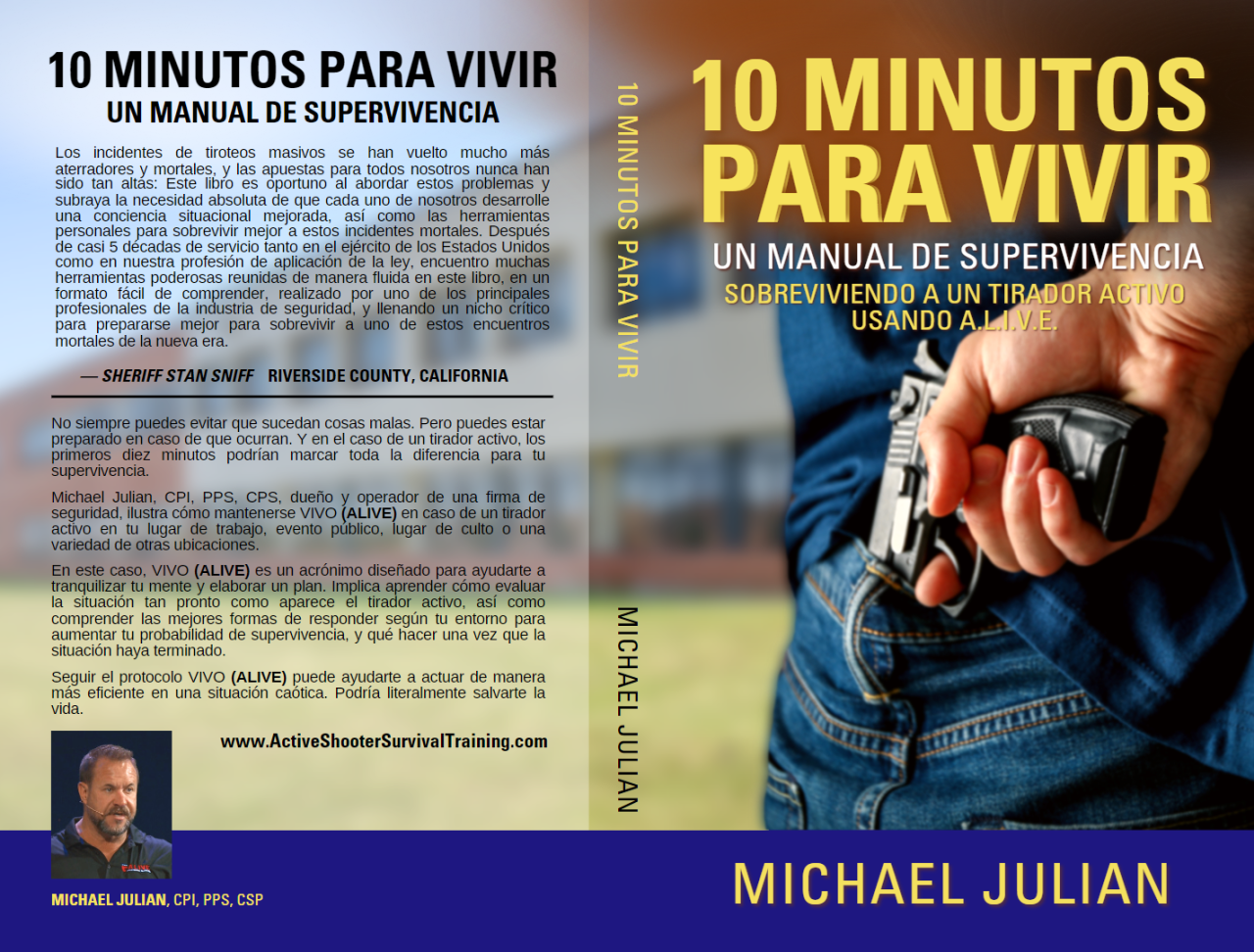
ALSO AVAILABLE FOR AUDIO DOWNLOAD, E-BOOK, AND PAPERBACK / HARDCOVER ON AMAZON



Hear From An A.L.I.V.E. Student Survivor Of The Las Vegas Massacre
"As a retired 32 year law enforcement veteran, with several years of SWAT and tactical experience, I learned some different unique perspectives as it pertains to civilians dealing with active threat situations. Very good class for civilians who may have never experienced reacting to a life and death stressful situation."
- Christopher C.
A.L.I.V.E. STANDS FOR:
Assess
Assess the situation quickly
Leave
Leave the area if you can
Impede
Impede the shooter
Violence
Violence may be necessary
Expose
Expose your position carefully for safety
INDUSTRIES WE SERVE
Corporations
Government
Healthcare
Places of worship
Schools & Universities
Venues
MICHAEL JULIAN
Creator of A.L.I.V.E.
A.L.I.V.E., which stands for Assess, Leave, Impede, Violence, and Expose, was created in 2014 when Michael began teaching his Active Shooter Survival philosophy throughout the United States. His book on the subject, 10 Minutes to Live: Surviving an Active Shooter Using A.L.I.V.E. was published in 2017 and the online version of the A.L.I.V.E. Training Program was launched in 2019 and is now part of the corporate security training program for companies throughout the world.

Why A.L.I.V.E. Active Shooter
Survival Training Program?
The A.L.I.V.E. Active Shooter Survival Training Program is a comprehensive training program designed to provide individuals with the necessary skills and knowledge to survive an active shooter incident. Its emphasis on situational awareness and decision-making makes it a practical and effective approach to active shooter situations. By empowering individuals to take proactive measures to protect themselves and others, the program can help prevent tragedies and save lives.