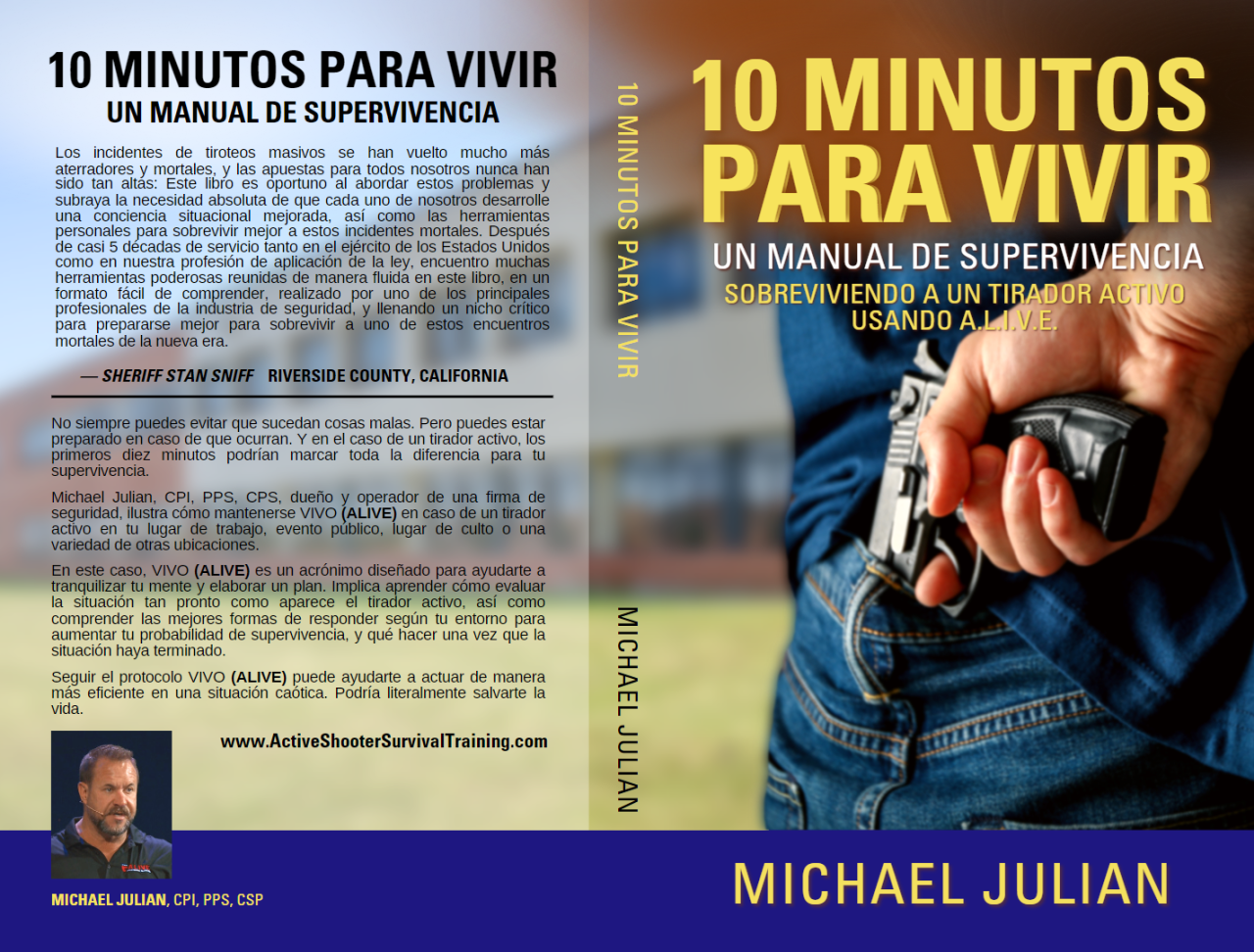
"Michael Julian has written an excellent book. Practical, detailed, and a potential life saver if you find yourself in the midst of a targeted attack."

Active Shooter Training for Logistics and Distribution Centers: A 2026 Preparedness Guide for Warehouse and Fulfillment Operators
A distribution center is one of the hardest environments in commercial real estate to defend against an active shooter event, and that fact is rarely reflected in the training programs operators have in place. Active shooter training for logistics and distribution centers is the site-specific preparation that teaches warehouse, fulfillment, and trucking-terminal teams how to detect, respond to, and survive a targeted attack inside a sprawling, open-floor facility with hundreds of workers, dozens of dock doors, and shift turnover every eight hours.
In our 30 years of training operators across security-sensitive industries, the logistics vertical is where the gap between "we did a video" and "the floor knows what to do" is the widest.
Why distribution centers are an elevated-risk environment
Workplace violence is not a niche concern for the logistics sector. The Bureau of Labor Statistics recorded 740 workplace homicides in the United States in 2022, and the transportation and warehousing sector consistently appears in the top tier of fatal-injury rates compared with other industries (BLS, 2023). The FBI's 2024 active shooter report counted 48 active shooter incidents in 2024, with the commerce category (which includes warehouse and fulfillment facilities alongside retail) historically accounting for the largest share of incidents and victims (FBI, 2025).
Three structural features make a distribution center harder to defend than a typical office:
•          Scale. A modern fulfillment center can run 500,000 to 1,500,000 square feet under one roof, with sight lines blocked by pallet racks, conveyor lines, and shrink-wrap stations.
•          Workforce turnover. Peak-season hiring brings hundreds of temporary workers through a single facility in weeks, often without time for serious safety onboarding.
•          Open perimeter. Dock doors, driver lounges, gatehouse-only access control, and 24/7 truck traffic create dozens of entry points that a determined attacker can exploit.
A 2024 Workplace Violence Prevention summary from SHRM noted that nearly 60% of HR professionals say their organization has experienced a workplace-violence incident in the past five years, and only a minority of frontline workers reported having received specific training (SHRM, 2024).
What attackers actually do inside a warehouse
The pattern is not the one most operators rehearse. Inside large distribution facilities, attacks more often originate from a current or recently separated employee than from an outside intruder. The attacker enters through a door they already have access to, often during shift change when supervision is at its lowest. The attack typically targets a known person first - a supervisor, a trainer, a coworker - before becoming indiscriminate.
That sequence has two operational implications. First, the people most likely to spot the early warning signs are shift supervisors, leads, and trainers who interact with the workforce every day. Recognizing early warning signs before a workplace attack is not a security-team-only skill; it is a frontline competency.
Second, the standard "run, hide, fight" sequence has to be adapted to a 500,000-square-foot building. A worker 600 feet from the nearest exterior door cannot simply "run." Site-specific training maps the actual floor and gives workers route options based on where they are standing, not a generic poster.
What an effective logistics-center training program covers
When we work with a fulfillment or distribution operator, the program is built around four layers.
Floor-mapped response drills
We walk the actual building. Every zone, mezzanine, mod, dock, breakroom, locker bank, and outbound staging area gets a written response logic that workers can rehearse. The point is muscle memory keyed to where a worker actually stands during a shift.
Supervisor-tier threat recognition
Shift supervisors and team leads receive deeper training on behavioral indicators, peer-conflict escalation, and how to route a concern to HR and security without retaliating, isolating, or tipping the subject. SHRM's 2024 guidance and the U.S. Secret Service NTAC analyses of targeted attacks both reinforce that early reporting from peers is the single highest-yield signal organizations get.
Tabletop exercises with HR, security, and operations
We sit HR, the security team, operations leadership, and (when applicable) on-site contract guards through a structured tabletop. The goal is to surface the gaps that only show up under stress: who calls 911, who pulls the badge access, who notifies inbound trucks to hold off the gate, who communicates with corporate, who locks down the mezzanine office.
Survival training, not awareness training
This is where the difference matters most. A short video on workplace violence is not survival training. We cover what real survival training covers that compliance courses do not - decision-making under duress, denial-of-entry tactics for offices and breakrooms, medical response in the first three minutes before EMS arrives, and how to communicate location to responding officers in a building that has no addresses on the interior.
Regulatory pressure is rising
OSHA's General Duty Clause continues to be the primary federal exposure for warehouse operators whose workplace violence response is judged insufficient after an incident. OSHA's 2024 enforcement guidance reinforces that employers can be cited for failing to take reasonable steps to address recognized workplace-violence hazards, and several state-level rules (California's SB 553, effective July 2024) now mandate written workplace violence prevention plans and training for nearly all employers, including warehouse and distribution operators (CalOSHA, 2024). Operators with multi-state footprints should expect more states to follow California's model in 2026 and 2027.
What good preparedness looks like on the floor
A well-trained logistics facility does not look like a fortress. It looks like a building where the lead on a shift can name the three nearest exits without checking, where a temp worker on day two has been briefed on the "if you hear gunfire" sequence, where the dock supervisor knows how to lock down the inbound gate, and where HR and security have rehearsed a behavioral-concern handoff that does not get lost in the seam between departments.
Frequently asked questions
Are distribution centers actually at higher risk than other workplaces? Yes. Bureau of Labor Statistics data has placed transportation and warehousing among the higher-rate industries for fatal workplace injury, and the FBI's commerce category (which includes warehouses) is consistently the most-affected category in active shooter incident counts. Combined with the operational features of large warehouses - workforce scale, turnover, and open perimeters - the risk profile is meaningfully elevated relative to a comparably sized office.
How is logistics training different from training for an office or retail store? The building is the difference. A 600,000-square-foot fulfillment center has interior dead-ends, blocked sight lines from racking, multiple mezzanines, and no exterior visibility from most of the floor. Generic "run, hide, fight" guidance has to be translated into floor-specific routes, zone-based response options, and supervisor-tier coordination across mods.
What does an A.L.I.V.E. training engagement look like for a distribution center? We start with a site walk and a review of existing policies, run supervisor-tier sessions, deliver tiered training for the general workforce (including temp workers), and run a leadership tabletop with HR, security, and operations. Most engagements include refresher training scheduled around peak-season hiring cycles.
Will this satisfy OSHA and state workplace violence prevention requirements? A site-specific A.L.I.V.E. program meets or exceeds OSHA General Duty Clause expectations for workplace violence preparedness and aligns with state-level requirements such as California SB 553. We provide written documentation of training delivery, attendance, and content scope for your compliance file.
How often should logistics teams retrain? We recommend a full refresher annually, with shorter supervisor-tier refreshers every six months and onboarding modules built into peak-season hiring. Workforce turnover is the single biggest reason a program goes stale.
Train your distribution center the right way
If you operate a warehouse, fulfillment center, or trucking terminal and your current workplace violence program is a poster, a video, and an annual sign-off, it will not perform under stress. A.L.I.V.E. builds site-specific training that the floor will actually use. Contact A.L.I.V.E. today to schedule a site walk and a training proposal for your facility.
About the author
Michael D. Julian is the creator of the A.L.I.V.E. Active Shooter Survival Training program and a 30-year security and investigations executive. He served as President of the California Association of Licensed Investigators (CALI) from 2005 to 2015 and has trained thousands of corporate, educational, faith-based, and government personnel in active threat survival. Connect with Michael on LinkedIn.
LEARN HOW TO SURVIVE AN ACTIVE SHOOTER!
ALSO AVAILABLE FOR AUDIO DOWNLOAD, E-BOOK, AND PAPERBACK / HARDCOVER ON AMAZON




Hear From An A.L.I.V.E. Student Survivor Of The Las Vegas Massacre
"As a retired 32 year law enforcement veteran, with several years of SWAT and tactical experience, I learned some different unique perspectives as it pertains to civilians dealing with active threat situations. Very good class for civilians who may have never experienced reacting to a life and death stressful situation."
- Christopher C.
A.L.I.V.E. STANDS FOR:
Assess
Assess the situation quickly
Leave
Leave the area if you can
Impede
Impede the shooter
Violence
Violence may be necessary
Expose
Expose your position carefully for safety
INDUSTRIES WE SERVE
Corporations
Government
Healthcare
Places of worship
Schools & Universities
Venues
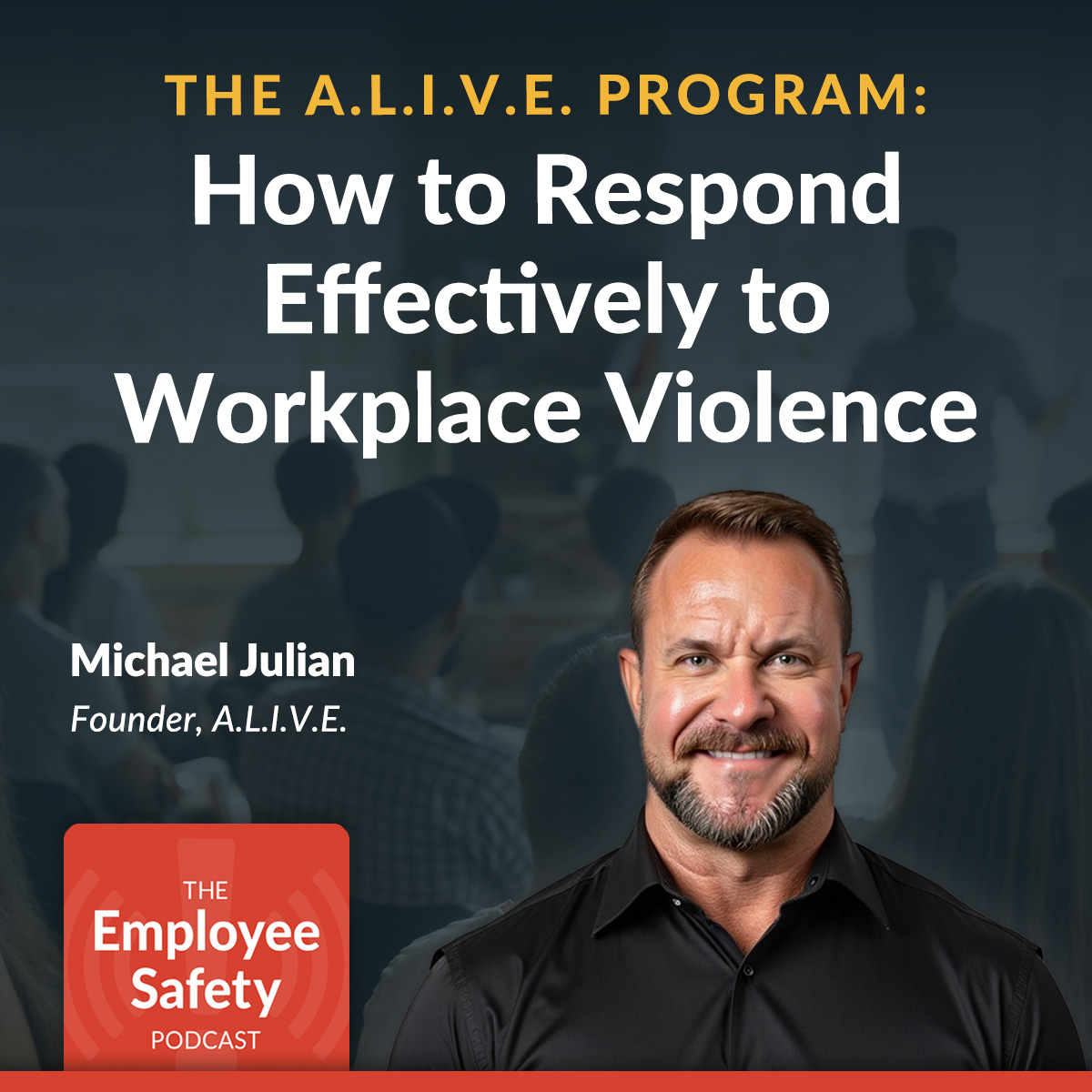
MICHAEL JULIAN
Creator of A.L.I.V.E.
A.L.I.V.E., which stands for Assess, Leave, Impede, Violence, and Expose, was created in 2014 when Michael began teaching his Active Shooter Survival philosophy throughout the United States. His book on the subject, 10 Minutes to Live: Surviving an Active Shooter Using A.L.I.V.E. was published in 2017 and the online version of the A.L.I.V.E. Training Program was launched in 2019 and is now part of the corporate security training program for companies throughout the world.

Why A.L.I.V.E. Active Shooter
Survival Training Program?
The A.L.I.V.E. Active Shooter Survival Training Program is a comprehensive training program designed to provide individuals with the necessary skills and knowledge to survive an active shooter incident. Its emphasis on situational awareness and decision-making makes it a practical and effective approach to active shooter situations. By empowering individuals to take proactive measures to protect themselves and others, the program can help prevent tragedies and save lives.