
"Michael Julian has written an excellent book. Practical, detailed, and a potential life saver if you find yourself in the midst of a targeted attack."
Definition of An Active Shooter
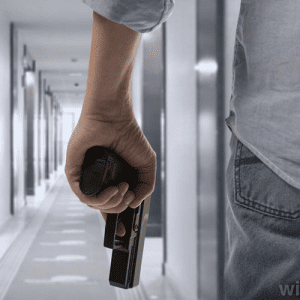
A.L.I.V.E. defines active shooter as "An individual actively engaged in killing, or trying to kill, as many people possible in as short amount of time as possible."
U.S. governmental agencies define an active shooter as "an individual actively engaged in killing or attempting to kill people in a populated area."
While these types of violent offenders are often armed with handguns, long guns, or both, notice that the definition does not explicitly say firearms. Therefore, you may also hear the terms active killer, mass killer, or mass attacker in place of an active shooter. This is especially true if the suspect uses another type of weapon, such as a knife or machete, to inflict terror on a larger scale.
When determining whether an event qualifies as an active shooting incident, the Federal Bureau of Investigations (FBI) considers factors such as:
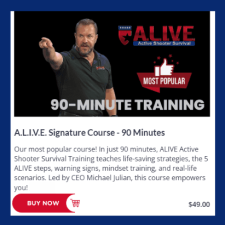
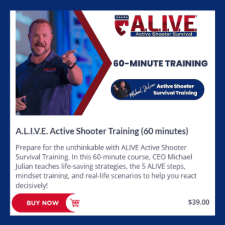
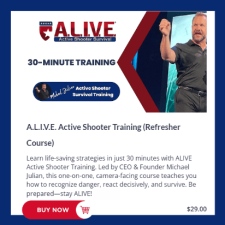
Being prepared to respond to an active shooter incident is critical to improving your chances of survival until law enforcement is able to arrive on the scene and stop the threat. A.L.I.V.E. offers Active Shooter Survival Training programs to individuals and groups both in person and online. These programs will teach you the five steps to take if you ever find yourself in the midst of an active shooter event.
Active shooters are also referred to as an Active Threat or an Active Assailant Sources: FBI.govDefinition of an Active Shooter - and Why It Matters for Training
The FBI defines an active shooter as one or more individuals actively engaged in killing or attempting to kill people in a populated area. The definition is intentionally narrow: it captures the live, in-progress nature of the attack, where the attacker has not yet been stopped, and decisions made by civilians in the next ten minutes determine survival. Understanding this definition is the foundation of effective active shooter survival training.
Active shooter incidents differ from generic gun violence and from "mass shootings," a term often applied retroactively based on casualty counts. ALIVE's active shooter survival training is built around the live, dynamic nature of these events. The five-step ALIVE method - Assess, Leave, Impede, Violence, Expose - gives civilians a clear, repeatable decision tree they can execute under stress. Training is delivered in two formats: online active shooter training courses and in-person active shooter survival training.
Why Definitions Matter for Workplace and School Plans
Workplace violence prevention plans, OSHA general-duty compliance, California SB 553, and school safety acts like Pennsylvania Act 55 all reference the active shooter definition. Getting the definition right keeps your plan focused on the actual threat - a live attacker - instead of being diluted into general gun-policy debate. For background on incident classification, see the ALIVE resources page.
Frequently Asked Questions
What is the FBI definition of an active shooter?
The FBI defines an active shooter as "one or more individuals actively engaged in killing or attempting to kill people in a populated area." The definition focuses on the ongoing nature of the attack, not the weapon or motive.
How is an active shooter different from a mass shooter?
"Active shooter" describes an unfolding event in real time. "Mass shooter" is typically a retroactive classification based on casualty counts. Active-shooter response training focuses on the live event.
Are there warning signs?
Yes. Behavioral threat assessment research shows attackers often exhibit pre-incident indicators - grievance language, leakage of plans, fixation on prior attackers, and concerning behavior changes - that can be detected and reported.
Can civilians actually do anything?
Yes. Civilian survival depends on rapid decisions: assess, leave, impede (barricade), violence (counter when no other option), and expose (signal help once safe). ALIVE teaches this five-step model in online and in-person formats.
Where can I read more?
FBI active shooter reports, DHS "Run, Hide, Fight" guidance, and the ALIVE resources page all offer reliable starting points.
Online Active Shooter Training Courses
LEARN HOW TO SURVIVE AN ACTIVE SHOOTER!
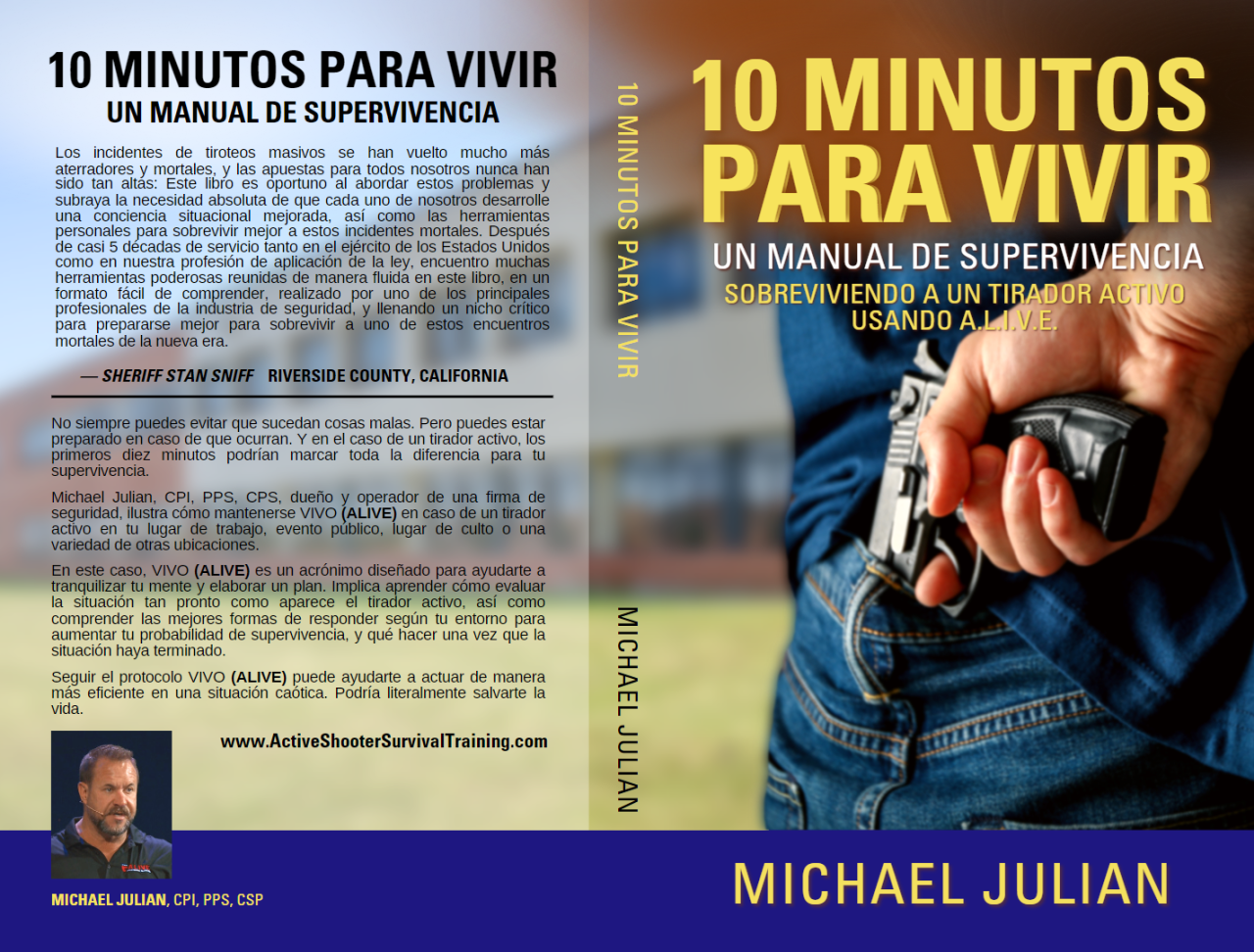
ALSO AVAILABLE FOR AUDIO DOWNLOAD, E-BOOK, AND PAPERBACK / HARDCOVER ON AMAZON




Hear From An A.L.I.V.E. Student Survivor Of The Las Vegas Massacre
"As a retired 32 year law enforcement veteran, with several years of SWAT and tactical experience, I learned some different unique perspectives as it pertains to civilians dealing with active threat situations. Very good class for civilians who may have never experienced reacting to a life and death stressful situation."
- Christopher C.
A.L.I.V.E. STANDS FOR:
Assess
Assess the situation quickly
Leave
Leave the area if you can
Impede
Impede the shooter
Violence
Violence may be necessary
Expose
Expose your position carefully for safety
INDUSTRIES WE SERVE
Corporations
Government
Healthcare
Places of worship
Schools & Universities
Venues
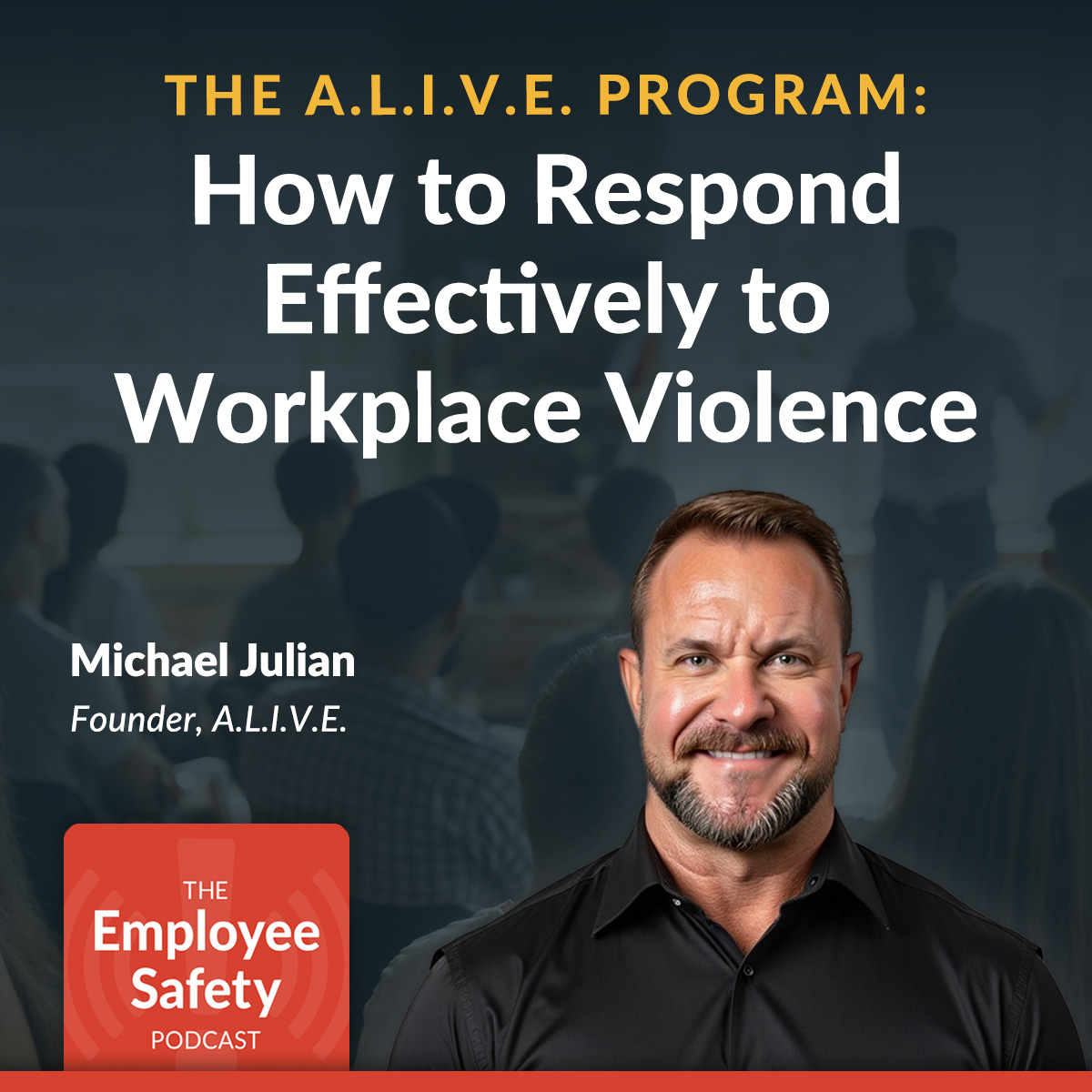
MICHAEL JULIAN
Creator of A.L.I.V.E.
A.L.I.V.E., which stands for Assess, Leave, Impede, Violence, and Expose, was created in 2014 when Michael began teaching his Active Shooter Survival philosophy throughout the United States. His book on the subject, 10 Minutes to Live: Surviving an Active Shooter Using A.L.I.V.E. was published in 2017 and the online version of the A.L.I.V.E. Training Program was launched in 2019 and is now part of the corporate security training program for companies throughout the world.

Why A.L.I.V.E. Active Shooter
Survival Training Program?
The A.L.I.V.E. Active Shooter Survival Training Program is a comprehensive training program designed to provide individuals with the necessary skills and knowledge to survive an active shooter incident. Its emphasis on situational awareness and decision-making makes it a practical and effective approach to active shooter situations. By empowering individuals to take proactive measures to protect themselves and others, the program can help prevent tragedies and save lives.