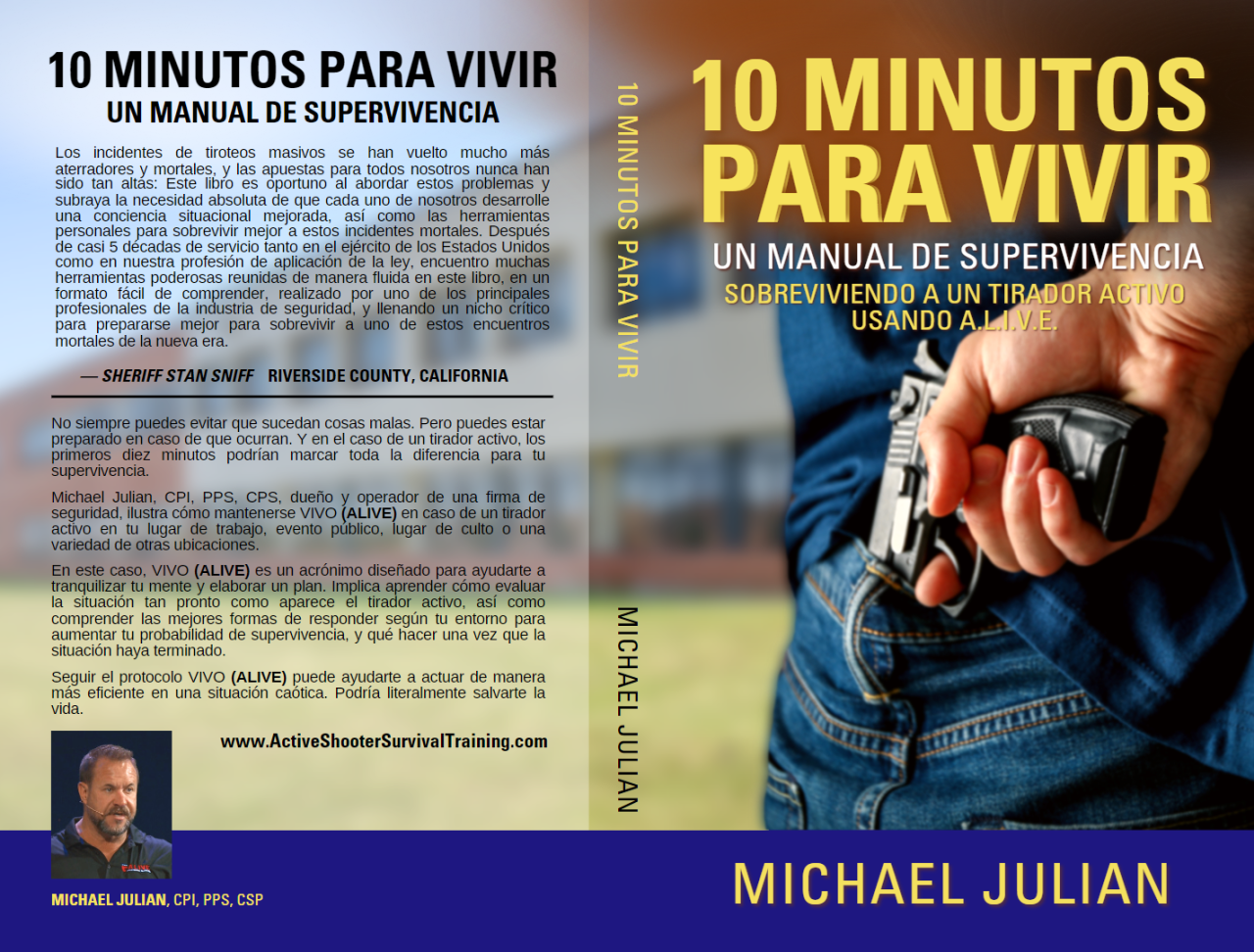
"Michael Julian has written an excellent book. Practical, detailed, and a potential life saver if you find yourself in the midst of a targeted attack."

Why Emergency Plans Must Be Practiced to Be Effective
A Written Plan Is Only the Beginning
Many organizations have emergency response plans. These plans often outline procedures for evacuations, lockdowns, medical emergencies, and other critical situations.
While having a plan is important, a written document alone does not prepare people for a real emergency.
In high stress situations, individuals rarely respond based on what they have read. They respond based on what they have practiced.
Stress Changes How People Think and React
During a violent emergency or crisis event, the human body experiences intense stress. Heart rate increases. Adrenaline surges. Cognitive processing can slow or narrow.
Under these conditions, individuals may struggle to recall procedures that exist only on paper.
Without practice, people often hesitate, become confused, or look to others for direction. These delays can significantly affect outcomes during fast moving emergencies.
Practice Builds Familiarity
When emergency procedures are practiced, individuals develop familiarity with the actions required during a crisis. Instead of trying to remember instructions under stress, they rely on learned behavior.
Practicing emergency responses helps people:
-
Recognize the situation faster
-
Move toward exits or safe areas more quickly
-
Understand their role during the event
-
Coordinate with others more effectively
-
Maintain clearer decision making under pressure
Familiarity reduces hesitation.
Training Creates Muscle Memory
Repetition helps convert knowledge into action. When people practice emergency procedures, their responses begin to feel more natural.
This process is often referred to as muscle memory. The body and mind begin to recognize patterns and respond more efficiently.
In a crisis, individuals who have practiced emergency responses are more likely to act decisively rather than freeze or wait for instructions.
Practice Reveals Weaknesses in the Plan
Another benefit of practicing emergency procedures is the ability to identify gaps in the plan itself.
During drills or training exercises, organizations may discover:
-
Confusing instructions
-
Unclear leadership roles
-
Physical barriers to evacuation
-
Communication breakdowns
-
Areas where additional training is needed
Identifying these issues during practice allows improvements before a real emergency occurs.
Prepared Individuals Support Others
In emergencies, people often look to those around them for guidance. When individuals have practiced emergency procedures, they are more likely to help direct others toward safe actions.
Prepared individuals can:
-
Guide others to exits
-
Provide calm direction
-
Reduce confusion
-
Support coordinated movement
This collective preparedness improves the overall response of the group.
Preparedness Is an Ongoing Process
Emergency preparedness should not be treated as a one-time event. As organizations grow, facilities change, and staff turnover occurs, procedures must be reviewed and practiced regularly.
Ongoing training ensures that preparedness remains active rather than theoretical.
The Takeaway
Emergency plans are essential, but plans alone do not prepare people for real emergencies. Without practice, individuals may struggle to recall procedures when stress is highest.
Training and repetition transform written plans into practical response skills. When people understand what to do and have practiced doing it, they are far more likely to act quickly and effectively.
A.L.I.V.E. provides active threat preparedness training designed to help individuals and organizations move beyond written plans and develop the awareness, decision making, and practiced response needed to survive real world emergencies.
LEARN HOW TO SURVIVE AN ACTIVE SHOOTER!
ALSO AVAILABLE FOR AUDIO DOWNLOAD, E-BOOK, AND PAPERBACK / HARDCOVER ON AMAZON




Hear From An A.L.I.V.E. Student Survivor Of The Las Vegas Massacre
"As a retired 32 year law enforcement veteran, with several years of SWAT and tactical experience, I learned some different unique perspectives as it pertains to civilians dealing with active threat situations. Very good class for civilians who may have never experienced reacting to a life and death stressful situation."
- Christopher C.
A.L.I.V.E. STANDS FOR:
Assess
Assess the situation quickly
Leave
Leave the area if you can
Impede
Impede the shooter
Violence
Violence may be necessary
Expose
Expose your position carefully for safety
INDUSTRIES WE SERVE
Corporations
Government
Healthcare
Places of worship
Schools & Universities
Venues
MICHAEL JULIAN
Creator of A.L.I.V.E.
A.L.I.V.E., which stands for Assess, Leave, Impede, Violence, and Expose, was created in 2014 when Michael began teaching his Active Shooter Survival philosophy throughout the United States. His book on the subject, 10 Minutes to Live: Surviving an Active Shooter Using A.L.I.V.E. was published in 2017 and the online version of the A.L.I.V.E. Training Program was launched in 2019 and is now part of the corporate security training program for companies throughout the world.

Why A.L.I.V.E. Active Shooter
Survival Training Program?
The A.L.I.V.E. Active Shooter Survival Training Program is a comprehensive training program designed to provide individuals with the necessary skills and knowledge to survive an active shooter incident. Its emphasis on situational awareness and decision-making makes it a practical and effective approach to active shooter situations. By empowering individuals to take proactive measures to protect themselves and others, the program can help prevent tragedies and save lives.